 DESK
DESK
How the desk thinks about selection
We start with role fit, then venue fit, then toss. Recent form is a tie-breaker, not the primary input. The methodology is what we apply to every predicted XI that leaves the desk.
This page is the doorway into the rest of the fantasy-tips coverage. Read it once, then return to it as a reference when individual guide pages link back. The desk updates the methodology section any time the underlying math changes — which is usually once per season, never week-to-week.
Three roles, three questions before any selection
Before a single name is written onto the team sheet, the desk runs three role-fit checks. They are not optional, and they are not dependent on whether the player in question had a good previous match.
The first question: does the player have a guaranteed role? A role means a fixed batting position, a fixed quota of overs, or a fixed bowling phase. Anything less than that is a projection, and projections decay quickly across a tournament. The desk marks projections with a small asterisk in the predicted XI page, and down-weights them in the captain shortlist.
The second question: does the venue match the player's strengths? A wrist spinner at Chepauk is a different pick than a wrist spinner at Wankhede. A square-of-the-wicket batter at Chinnaswamy is a different pick than a square-of-the-wicket batter at Dharamsala. The desk keeps a venue notebook with surface type, boundary length, average first-innings score, and dew history, and pairs that notebook with the player notes.
The third question: does the toss change the role ceiling? A batting-first innings at Eden Gardens can cut a death-overs finisher's ceiling roughly in half. A chasing innings at Wankhede after 19:00 IST can lift a wrist spinner out of the attack entirely. The desk reads the toss first, then re-ranks.
Captain strategy, in brief
Captain picks are decided by role guarantee and venue fit, not recent runs. The 2x multiplier on captaincy points turns a swing of two or three fantasy points per match into a swing of four or six, and that is enough to break a leaderboard.
The shortlist the desk keeps for captaincy is short — usually three to five names per fixture, never ten. Anything past five is a list of players who do not have a guaranteed role, and the desk has a policy of not captaincy a player whose role is a projection.
The full reasoning sits in the captain strategy guide. That guide includes the matrix the desk uses to score captaincy candidates, and a worked example on a recent fixture.
Salary-cap math, without the spreadsheet
Three rules sit at the centre of the desk's salary-cap math. They are deliberately simple. The aim is to make the same call on every fixture, even when the desk is tired, even when the player pool is muddled, and even when the captaincy shortlist disagrees with the salary grid.
Rule one: never spend premium credits on the wicketkeeper slot. Wicketkeepers score off catches and stumpings, both of which are noisy and low-volume. The desk holds the wicketkeeper slot to the second-cheapest tier.
Rule two: always spend premium credits on the role the captain occupies. The captaincy 2x multiplier compounds with a high-role-ceiling player. If the captaincy is going to a wrist spinner, the wrist-spinner pick is the premium spend, not the opener.
Rule three: leave one slot for a differential. A differential is a low-ownership pick that the rest of the leaderboard is unlikely to select. The desk runs a single differential per fixture. Two is too many — the math starts to look like noise.
The full reasoning sits in the salary-cap math guide.
Role-fit, the highest leverage variable
Role-fit is the single highest leverage variable in fantasy selection. It explains more variance in fantasy scores than form, than venue, and than toss combined.
A role-fit pick is a player whose role is locked: an opener who has opened the last six matches in a row, a wrist spinner who has bowled the full four overs in each of the last eight matches, a death-overs pacer who has bowled at least two overs in the back end in each of the last five matches. The desk does not require any of those numbers to be exact. The desk requires that the role is the coach's settled intent, not a one-match experiment.
The full reasoning sits in the role-fit guide.
Death-overs ranking and the role ceiling
Death-overs specialists tend to be the highest variance role on a fantasy team sheet. A single over can swing the entire points tally, and the difference between a role-locked death bowler and a part-time option at the death is the difference between a ceiling of 90 fantasy points and a ceiling of 30.
The desk ranks death-overs bowlers by role guarantee, not by economy rate. Economy rate is a backward-looking metric. Role guarantee is a forward-looking metric. The 2026 list is in the .
Why we skip form as a primary input
Recent runs are not a leading indicator of fantasy ceiling. They are a coincident indicator. A batsman who just scored 80 may have benefited from a flat surface, a weak matchup, or a coin flip that fell the right way. None of those factors carry forward.
A batsman with a settled role at a venue that suits them is a stronger pick than a batsman who just scored 80. The desk inverts the conventional wisdom on this on purpose. The full reasoning is in the desk's methodology note on the about page.
There is one exception. A player whose role has just been confirmed after a stretch of role uncertainty — for example, a middle-order batter who has been promoted to opener — can be re-entered into the captaincy shortlist on the strength of that confirmation. Confirmation is a forward-looking input. Form is not.
Matchup math: surface, square, dew
Matchups are a smaller variable than role-fit, but they still matter. The desk keeps three matchup notes per fixture: surface (pace or turn, two-paced or flat), square (boundary length, square boundaries versus straight), and dew (forecast moisture drop after sunset).
Surface and square are static. They are known at the toss. Dew is dynamic. The desk re-reads the dew forecast every two hours during the day of the fixture, and adjusts the captaincy ranking if the dew line crosses the predicted innings break.
The matchup notes feed the venue notebook on the IPL 2026 hub page. The current notebook has ten venues, each with one line on surface, one on boundaries, one on average first-innings score, and one on dew.
Differentials, when to spend one slot on risk
A differential is a low-ownership pick whose fantasy ceiling is high enough to lift the team's overall points if it lands. The desk spends exactly one slot per fixture on a differential. Two differentials on the same team sheet tend to compound in the wrong direction.
Good differentials share three features: a role that is locked but recently changed (promotion, demotion, format switch), a matchup that suits them at the venue, and a price point low enough that the desk is not paying premium for the ceiling. The differential slot is where the salary-cap rulebook gives the desk the most room to manoeuvre.
The desk publishes a differential shortlist at the bottom of each predicted XI page. The shortlist is the desk's own projection — no other publication runs the same list, and the desk does not source the list from third-party aggregators.
Methodology page and limitations
For the full methodology, including the limitations of the role-fit-first model, see the about page. The desk is honest about what the model does not do: it does not predict individual match outcomes, it does not produce win probabilities, and it does not factor in news that has not been reported.
The desk also publishes corrections on the contact page whenever a methodology claim turns out to be wrong. The corrections are dated, linked back to the original claim, and not deleted from the page.
Reading list and companion guides
The companion guides for this hub cover the four pieces of math the desk runs on every fixture. They are short — eight minutes each, on average — and they are written to be read in any order.
The guides sit at: captain strategy, how fantasy points work, role-fit, and salary-cap math. Each guide ends with a worked example on a recent fixture.
Two desk visuals that anchor the methodology

Captaincy, the role-guarantee lens
Net-session footage is the desk's primary role-confirmation source. A captain who runs through full-intensity spells is a role-locked pick.
A second desk visual
Points math, the second-highest leverage variable
Once role-fit has set the team shape, the points table tells the desk where the captain multiplier is most likely to compound.
Latest evergreen guide for the methodology neighbourhood
Evergreen guides teach skill the desk reuses across every fixture. The newest one walks a reader through the four checks to run on any fantasy offer, trial credit or venue deal before committing real money. Hypothetical examples only; no live offer is named.
Recent retrospectives that walk the methodology
Two recent retrospectives work through the role-fit math on a published match preview line by line. The first is filed on the news desk; the second is the desk's companion piece on the away-format variable. Both are cross-referenced back to the methodology outlined above.
What to read next
Captain strategy
How role beats runs in captain choice.
Salary-cap math
Three rules for tight budget picks.

Role-fit, three questions to ask
Why role beats form in fantasy.
How fantasy points work
Every scoring event, broken down.
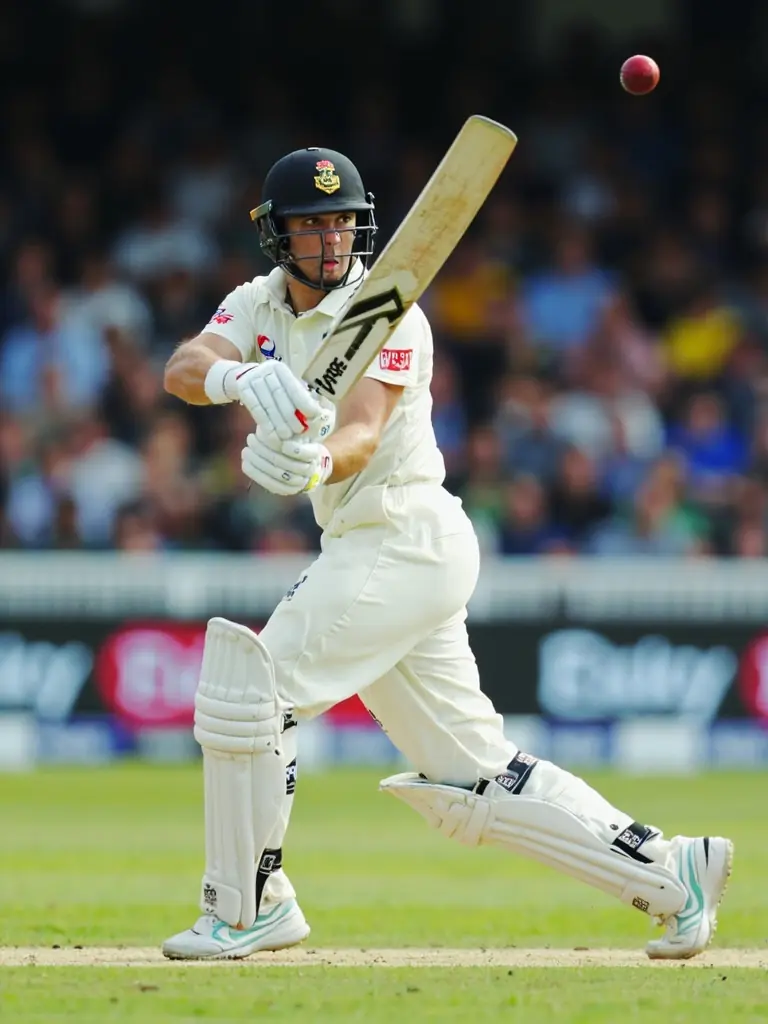
Predicted XIs
Projected XIs for every fixture.
Results and learnings
Weekly review of what role-fit math held up.
Reader questions on the desk coverage
Why no must-pick players lists?
Because must-pick lists tend to spread the desk's reasoning too thin. We prefer to walk readers through the role-fit math for each fixture. The math generalises; the list does not.
Can I send a tip to the desk?
No. The desk does not accept tips. We publish our own reads. Corrections to existing reads are welcomed via the contact page.
How often does the methodology change?
Once per season, in the desk's estimation. The role-first model has held up across four seasons. Small adjustments appear in the methodology note; large ones appear on the about page with a date stamp.
Does the desk publish win probabilities?
No. The desk publishes fantasy points expectations, not match-outcome probabilities. Match-outcome probabilities live on third-party sites that we link to but do not endorse.
Is the methodology the same for T20 internationals?
No. T20 internationals have shorter windows and different role allocation rules. The desk covers IPL fantasy only; the methodology note explains why.
Keep up with the desk
Open the match desk, the predicted XIs, and the news desk for tonight's coverage.