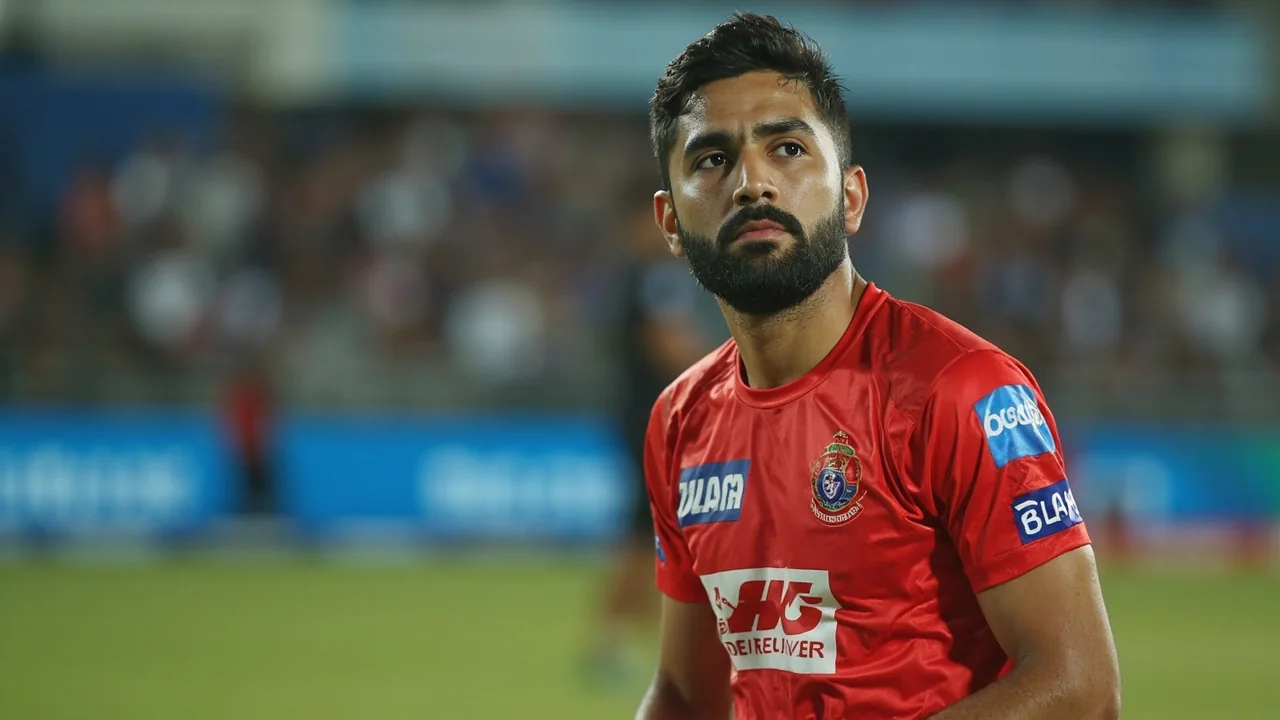
 RETRO
RETRO
The debut, the date and the dressing room
On the evening of 11 April 2019, Riyan Parag, then seventeen, became the second cricketer from Assam to play in the Indian Premier League when he took the field for the Rajasthan Royals against MS Dhoni's Chennai Super Kings at Sawai Mansingh Stadium in Jaipur. The Royals, captained by Ajinkya Rahane, were put in to bat first by CSK. Parag came in during the middle overs, with the hosts already rebuilding after a Steve Smith dismissal, and made 16 from 14 balls before being dismissed, then bowled three overs for 24 runs in his maiden IPL outing. The match ended on the final ball when Mitchell Santner struck a six to give the defending champions a win their lower order had scrambled to keep alive.
Filed as a retrospective. The date is part of the record; the moment belongs to a teenager who had already played Under-19 cricket for India. For readers who run fantasy squads on the live match feed, the read on a 2019 match is not a captain-pick calculation. It is the desk's way of keeping the league's human register intact: the players who came in, the line-ups they joined, the room they walked into, and the names that turn up again a season or two later when their role is no longer a debut but a fixture.
The structure that follows is editorial and source-traceable. Confirmed facts in the lead; the match context and Parag's specific contribution in the body; the broader significance for Assam cricket, for the Royals' 2019 season, and for the IPL's pipeline from the Northeast. Only what the published source supports is included. Anything that falls outside that boundary is labelled as such.
What Parag actually did on debut
The published source describes a measured contribution rather than a headline-making one. Parag scored 16 runs off 14 deliveries in the Rajasthan Royals innings and, with the ball, conceded 24 runs from his full allotment of three overs. There was no hat-trick of boundaries, no Player-of-the-Match flourish. The published scorecard distinguishes not-out contributions with an asterisk; Archer (13*) and Gopal (19*) carry it, Parag's 16 does not. What the debut did establish, plainly, was the entry line on a career card that runs forward from that night. Parag came in during the middle phase of the Royals' innings, with the hosts rebuilding through Ben Stokes after Smith's dismissal, and was dismissed for 16.
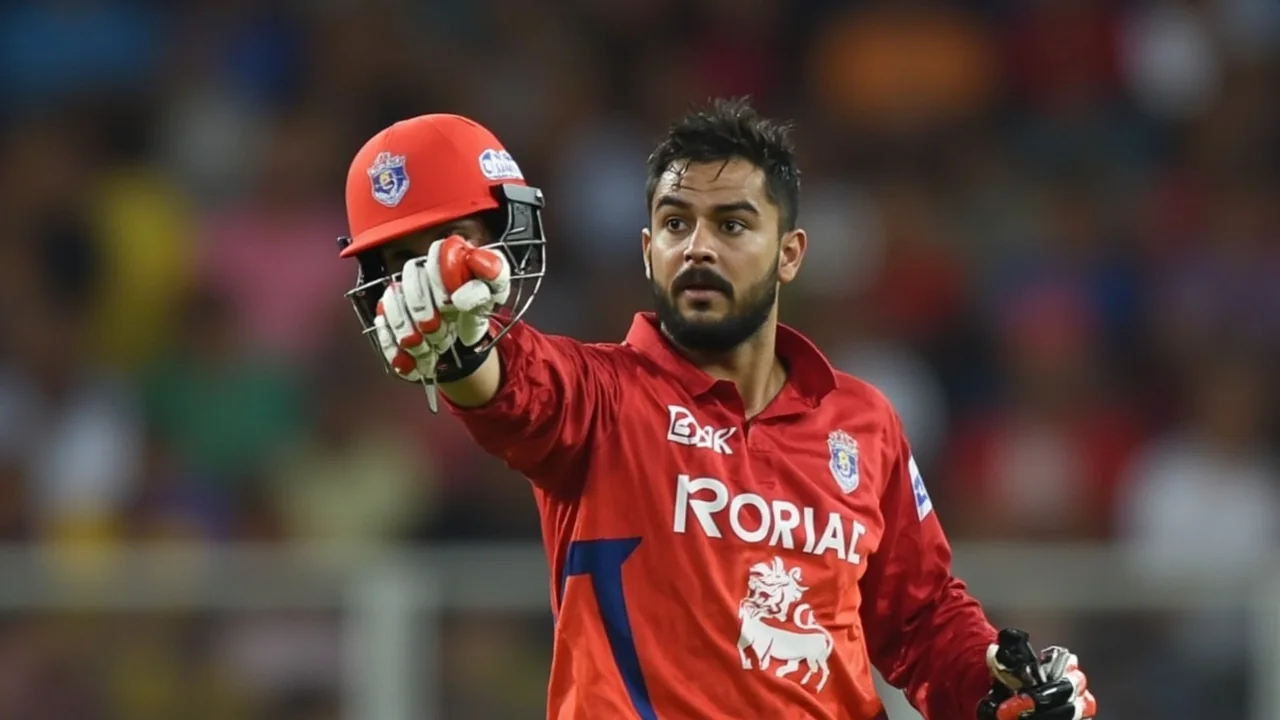 Debut frame. Sixteen off fourteen balls and three overs bowled. The contribution reads quieter than the headline, and the career reads longer than the scorecard.
The bowling figures matter as much as the batting figures in framing what kind of player the Royals were testing. Three overs for 24 runs against a Dhoni-led batting order at Sawai Mansingh is, on its own, neither impressive nor costly; in a debut, it is the first data point the franchise's analytics desk would have logged. Parag was, at that stage, primarily an all-rounder in the Under-19 setup who had already represented India at age-group level. The Royals' investment in him was not a one-match bet; it was an audition for a multi-season role.
The debut's quietness is partly a function of the match situation. Parag came in with the Royals already working through a middle-overs rebuild, and the team needed stability more than acceleration. Stokes' 28 off 26 and the lower-order hitting of Jofra Archer (13 not out off 12) and Shreyas Gopal (19 not out off 7) pushed the total to a defended 151 for 7. The debutant did his job without overshadowing it. That is, on the whole, the more useful first impression a young all-rounder can make on a captain already juggling overseas slots and Powerplay role assignments.
The match: a Royals innings that fell just short
Chennai won the toss and put Rajasthan in, a decision the defending champions made regularly in 2019 when the conditions and the home side's batting depth allowed it. The Royals' reply was organised around two partnerships: the opening stand that took the early risk, and the Stokes-led middle-overs recovery after Smith's dismissal. The end-of-innings acceleration was supplied by Archer and Gopal, whose late hitting dragged the total above the 150 mark and gave the bowlers something to work with.
The published numbers from the Royals' innings are modest by IPL standards but competitive on a Jaipur surface that has, in most seasons, offered bowlers a touch more purchase than the flat decks at Wankhede or Chinnaswamy. 151 for 7 in 20 overs was a chaseable total, and CSK's batting order, led by Dhoni at five or six, was built to chase totals rather than post them. The match would, in the end, come down to whether the Royals' late-innings bowling could prevent the visitors from getting past the line before the final over.
For readers who remember the 2019 IPL, the wider context is that the Royals' batting was, on most nights, the weaker half of their side. Their bowlers, with Archer leading the attack and Gopal's leg-spin finding purchase in the middle overs, gave them a chance in almost every fixture. The fact that the 2019 side finished a campaign short of the play-offs had more to do with consistency at the top of the order than with any single match. Parag's debut sits inside that season: useful, additive, but not, on its own, the variable that decided the Royals' trajectory.
The chase: Santner's final-ball six
The defining image of the night came in the final over of the chase. Chennai Super Kings needed the runs to win, Mitchell Santner was on strike, and the Royals' bowling was down to its last set of options. Santner hit a six off the final ball to seal a win that the visitors had not, on the balance of the innings, looked certain to take. The result was a last-ball thriller, the kind of finish the IPL reliably produces when two batting-deep sides are involved and the fielding side cannot close out the twentieth over.
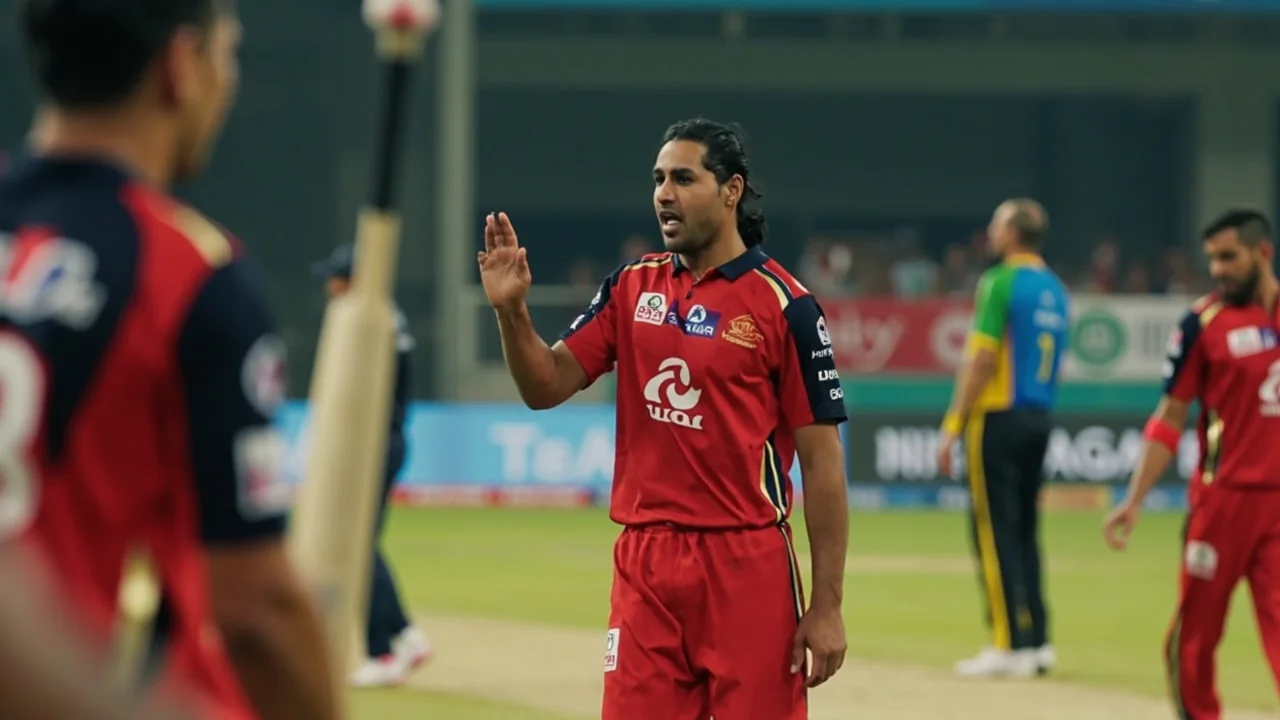 Final-over field. The Royals closed the innings without the wicket they needed; Santner took the last ball over the rope, and the chase ended in CSK's favour.
For Parag, the result was the harder part of the evening to sit with. The Royals had put in a serviceable batting performance and, with the ball, had done enough through the middle overs to keep CSK honest. The finish turned on one delivery. Debuts that end in last-ball losses carry a particular kind of lesson: the margin in T20 cricket is, more often than the scorecard suggests, a single ball at either end of the innings. Players who come through such losses with their role intact tend to be the ones whose careers stretch; players who chase the moment rather than the next ball often do not.
The 2019 Royals squad, of which Parag was the newest face, finished outside the play-offs. The defending champions, Chennai, used wins like this one as the foundation of a season that took them back to the final, where they lost to the Mumbai Indians. The debutant's career continued separately from the team's run; the league's structure allowed for both to be true at once.
The second Assam cricketer in the IPL
Parag's debut placed him in a small but distinctive group: cricketers from Assam who have represented the state at the senior level and been picked up by an IPL franchise. The published source records that he was the second cricketer from Assam to play in the IPL. The first, by several seasons, was a more experienced all-rounder whose IPL appearances predated Parag's. The Northeast's representation in the league has, in the years since, expanded, with players from Manipur, Meghalaya, Nagaland and Mizoram also taking the field; Assam's contribution remains the longest among the region's senior cricketers.
The pipeline matters at the desk level for one practical reason: the IPL's auction and scouting net reaches states that did not, a decade ago, have a clear route into franchise cricket. Parag was already on India's Under-19 radar when the Royals took him, but the fact that an IPL side invested a roster slot in a teenage all-rounder from Guwahati in 2019 reflects a scouting pattern that has, since then, become routine. Squads now routinely include two or three players who would not, a generation ago, have been on a franchise radar at all.
For Assam cricket in particular, the debut read as both a personal milestone and a regional marker. The state association had, for years, been building a pathway that combined age-group cricket with senior opportunities in the Ranji Trophy and the Syed Mushtaq Ali Trophy. Parag's IPL cap confirmed that the pipeline could carry a player all the way to the country's marquee T20 league. It did not, on its own, transform the state's first-class record, but it changed the ceiling against which the state's young cricketers measured their own ambitions.
How the 2019 Royals used him
The Royals' selection logic in 2019 was, by the standards of the league, less straightforward than most. Steve Smith and Ajinkya Rahane occupied the top-order batting slots; Ben Stokes, Jos Buttler and Jofra Archer filled three of the four overseas positions; the bowling attack was built around Archer and Shreyas Gopal, with a swing-bowling all-rounder spot rotating based on conditions. Parag's role, as the published source frames it, was middle-order batting and a bowling allotment through the middle overs. He did not, on debut, take the new ball; he did not, on debut, open the batting; he did not, on debut, keep wicket.
That pattern is worth noting because the Royals' later use of him, in subsequent seasons, has been markedly different. By 2020 and 2021, Parag was being asked to bat higher in the order, to take on more of the finishing role in tight chases, and to contribute overs of off-spin in the Powerplay. The 2019 debut was, in retrospect, a conservative use of a player whose ceiling the franchise had clearly identified. The data point on that debut was the batting-and-bowling line; the conclusion the franchise drew from it took two more seasons to articulate in selection terms.
For fantasy readers, the wider read is structural rather than personal. A debut framed as a middle-order batting plus three overs of bowling is, by definition, a low-floor contribution. A debut framed as a 16 off 14 and a tidy spell against Dhoni is, by the same definition, the kind of role-realistic performance that allows a young player to keep his slot until the team finds a higher-impact role for him. The Royals did not need Parag to win the match on 11 April 2019. They needed him to look like a player worth keeping in the squad for the next season's auction conversation. On the published evidence, he did.
Why the debut still reads cleanly seven years on
Most debut stories fade into the broader ledger of a player's career. Parag's did not, and the reason is not the scorecard. It is the gap between the modest match contribution and the much larger career that followed. Seven years on, Parag has represented the Royals across multiple seasons, has played white-ball cricket for India, and has become a recognisable name in the league's middle-order batting conversation. The debut, in that sense, is the entry point rather than the headline.
The other reason the debut reads cleanly is the franchise's use of it. The Royals have, in the years since, pointed to Parag's 2019 outing as evidence of their long-term player development model: take a teenager, give him a measured role, and let the role expand as the player's ceiling clarifies. The model is not unique to the Royals; most IPL franchises run some version of it. But it is most legible in players like Parag, where the debut itself was a small event and the career a large one.
For the desk, the cleanest read is the one the original report allows: a teenager played his first IPL match, contributed a useful but unflashy performance, and joined a franchise that was prepared to develop him over several seasons. Everything else is interpretation. The desk will keep tracking Parag's role in the Royals' middle order and, separately, in India's white-ball structure, in the same way it tracks every other player whose career began with a single line on a debut scorecard. The 2019 match file has been kept open for that reason. The next live update on the news desk will not, of course, be about this match. But the match itself has not been forgotten, and the read above is the desk's way of keeping the record honest.
Reader questions
When did Riyan Parag make his IPL debut?
On 11 April 2019, at Sawai Mansingh Stadium in Jaipur, against MS Dhoni's Chennai Super Kings.
Which team did he play for?
Rajasthan Royals, captained by Ajinkya Rahane. Chennai Super Kings won the toss and put the Royals in.
How did he score on debut?
Sixteen runs off fourteen balls before being dismissed, and three overs bowled for 24 runs against the Chennai batting order. The published scorecard marks Archer (13*) and Gopal (19*) as not out; Parag's 16 is recorded without an asterisk, in line with his dismissal.
Was he the first cricketer from Assam in the IPL?
He was the second cricketer from Assam to feature in the IPL.
Who won the match?
Chennai Super Kings, off the final ball, when Mitchell Santner hit a six to seal the chase.
What was the Royals' total?
151 for 7 in 20 overs, with contributions from Ben Stokes (28 off 26), Jofra Archer (13 not out off 12) and Shreyas Gopal (19 not out off 7).
Where was the match reported?
The News Mill, a Guwahati-based digital outlet, published the report dated 12 April 2019.
Continue reading the desk
Predicted XIs, captain logic, role-confirmation notes and the corrections log for the 2026 season.