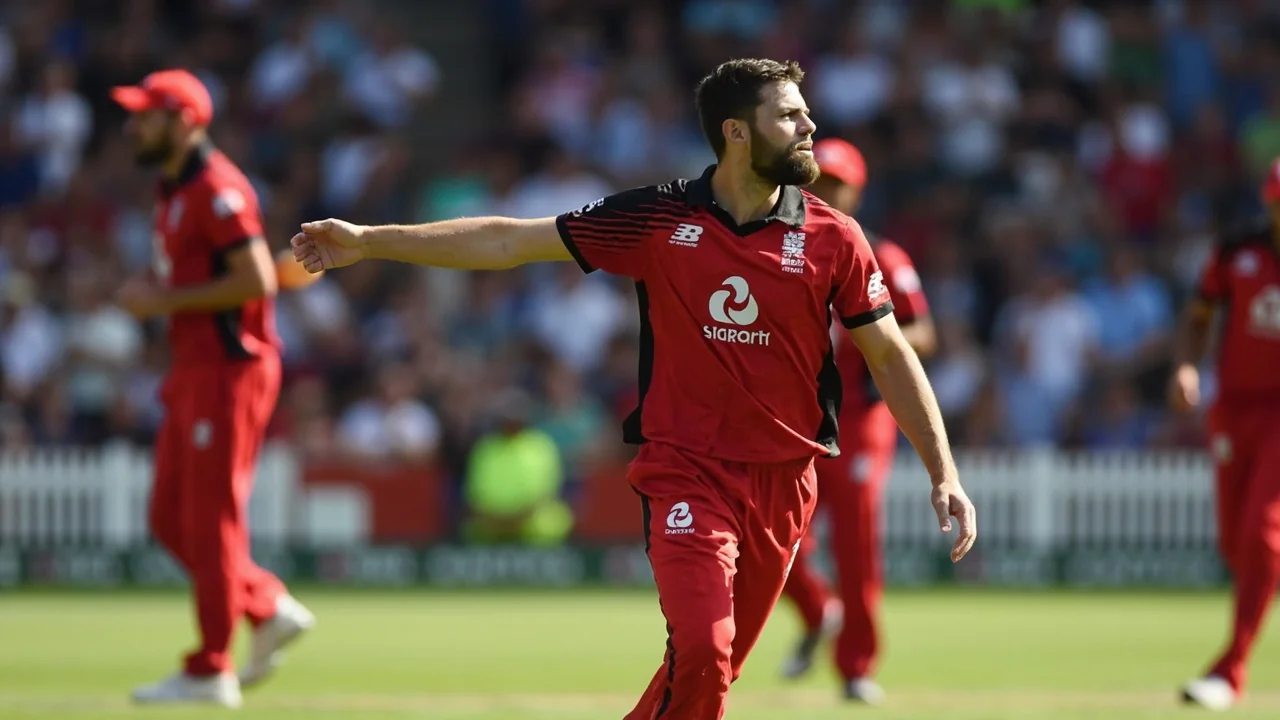
 RETRO
RETRO
The fixture, the date and the standings going in
On the morning of 5 July 2026, BDCricTime published a Dream11 preview for Vitality T20 Blast North Group Match 78 at Headingley, where Yorkshire were scheduled to host Leicestershire later that day. Yorkshire went into the round second on the North Group table with 22 points from nine games and a net run rate of 0.750, built on five wins, one no-result and three losses. Leicestershire sat fifth with 12 points from eight games and a net run rate of -1.344, fresh from a 74-run defeat to Nottinghamshire. Across their last five head-to-heads, Leicestershire held a narrow 3-2 lead, including a 12-run win over Yorkshire in early June.
The BDCricTime preview framed the match as a fixture the home side were favoured to win. Yorkshire had home advantage, a settled bowling structure, and the more convincing recent form. Leicestershire, on the published evidence, had the bigger names at the top of the order but less role guarantee through the innings. Headingley was forecast for a 13-22 C day with a slight chance of a quick shower, and the venue's average first-innings score at the time sat around 173. The published prediction was a Yorkshire win, citing home advantage, form, and stronger bowling depth led by Hasan Ali.
Filed as a retrospective. The article below restates the verified preview in plain editorial language, works through the probable XIs, the Dream11 picks, and the role math that decided the captaincy shortlist, then closes with the desk's read on how that role-fit logic travels beyond this one fixture. Only what the published source supports is included; anything outside that boundary is labelled as such. For readers who already work through the desk's fantasy tips and selection methodology, the article is intended as a worked example of how the methodology holds up against an away-format fixture where form numbers look strong on paper but role numbers carry more weight.
The standings read before toss
The North Group table going into this round framed the match as a contender-vs-mid-table fixture rather than a knockout. Yorkshire's 22 points from nine games gave them the second-best record in the group, behind only the side they were about to host on points-per-game but ahead of the rest on net run rate. Five wins, one no-result and three losses is the kind of profile that punishes a single bad afternoon: a fourth loss would have eaten into the cushion, but a fifth win would have all but locked in a home quarter-final route. Leicestershire's 12 points from eight games, by contrast, kept them in the chasing pack but with no margin for a second straight defeat.
The head-to-head ledger added a small complication. Yorkshire and Leicestershire had played five times in the recent T20 Blast cycle, and Leicestershire had taken three wins to Yorkshire's two. The 12-run Leicestershire win earlier in June sat in the recent memory banks of both dressing rooms and in the minds of the fantasy managers who'd captained the wrong player on that afternoon. Form numbers are, in the desk's framework, a tie-breaker. Head-to-head numbers are an even weaker input: they describe two previous matches, not the role allocation that the coaches had agreed for this one.
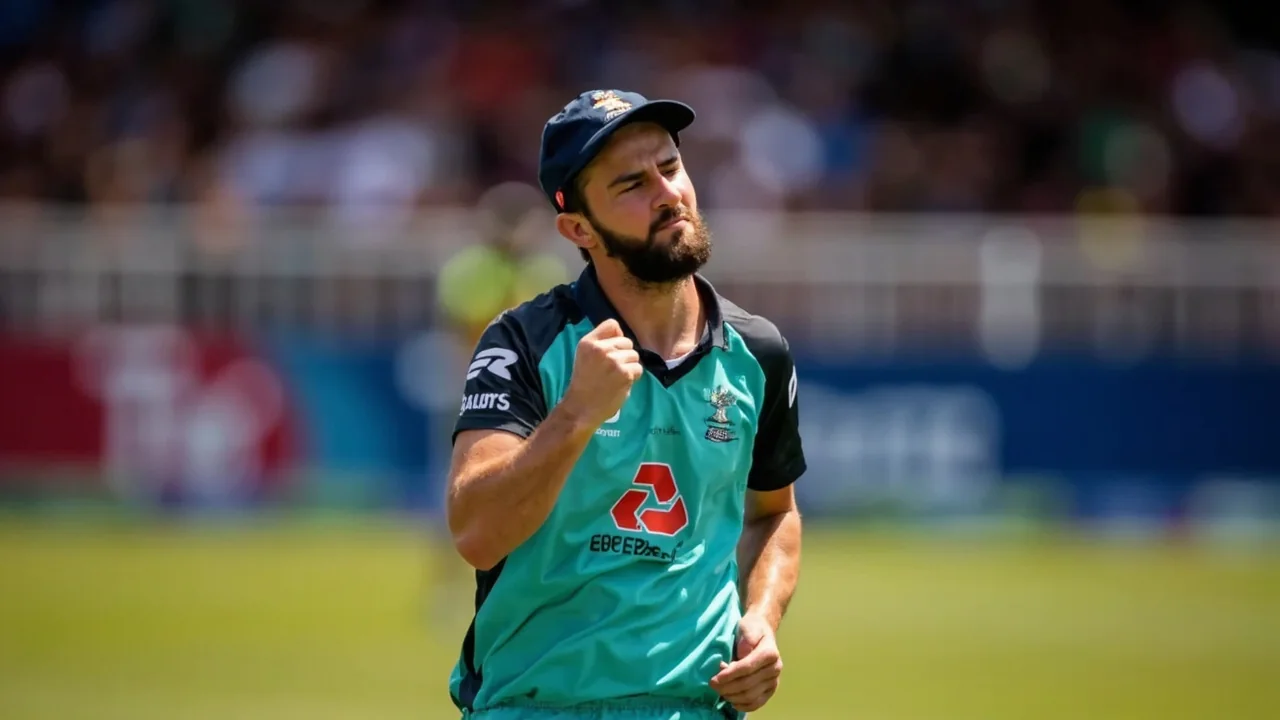 Role-locked depth. The BDCricTime preview framed Yorkshire's case on bowling depth. The image stands in for the role argument, not the player.
For fantasy managers, the standings read has a different value than for the teams themselves. The teams play the league table; the manager plays role allocation. The fixture's place in the table decides how aggressive each side will be with their batting order (Yorkshire were unlikely to defend 170 if they posted it; Leicestershire were unlikely to play for a 130 chase), but the role allocation for this match was decided before the standings mattered. The published XIs in the preview confirm that the role allocation was already set.
Probable Yorkshire XI and the role check
The BDCricTime preview listed Yorkshire's probable XI as Adam Lyth, Andrew Tye, Daniel Moriarty, Dom Bess, George Hill, Hasan Ali, Adil Rashid, Alex Wade, Benjamin Cliff, Ben Coad and Harry Duke (wicketkeeper). Reading the eleven as role slots rather than names gives a clearer picture of what the side was setting out to do. Lyth and the openers slot into the top three; Bess, Rashid and the part-time spin options rotate the middle overs; Tye, Cliff and Coad carry the new ball and the death; Hasan Ali sits between the two as a wicket-taking specialist; Duke keeps wicket and bats in the middle order.
The role check is straightforward. Lyth is a role-locked opener. Rashid is a role-locked wrist-spinner who bowls the full four overs in almost every fixture he plays. Coad and Cliff are role-locked seamers at either end of the innings. Hasan Ali, the published source confirms, had taken three, three, one, four and one wickets in his last five T20 outings, including a three-wicket haul against Durham. That is a five-match sequence that does not look like form noise; it looks like a bowler whose role is settled and whose matchups are reading the surface well. Duke is a role-locked keeper; Moriarty and Hill are role-locked domestic seam options who give the side a fifth and sixth bowler.
The one role question mark sits in the batting order. The probable XI does not pin down a fixed number-three slot, and the published preview does not specify which of the middle-order batters would take that position. For fantasy managers, this is exactly the kind of question the role-first model handles by down-weighting the number-three slot in the captain shortlist. A number-three whose role is not yet confirmed is a projection, not a guarantee, and the desk does not captain projections. The role-locked picks, on the published evidence, were the four bowlers, Rashid, and the top of the order.
Probable Leicestershire XI and the role check
The BDCricTime preview listed Leicestershire's probable XI as Ben Cox (wicketkeeper), Rishi Patel, Rehan Ahmed, Ben Mike, Liam Trevaskis, Josh Davey, Sam Wood, Stephen Eskinazi, Tom Scriven, Alex Green and Sol Budinger. The eleven reads as a top-heavy batting order with a thinner bowling structure than Yorkshire. Cox and Patel form the keeper-opener pair, Rehan Ahmed slots into the middle order with the spin-bowling role, Mike, Trevaskis and Scriven handle the seam workload, and the bench of Wood, Eskinazi, Green and Budinger gives the side batting depth but role uncertainty through the back end.
Nick Kelly, the side's leading scorer for the season at the time of the preview, does not appear in the probable XI. The published source records 242 runs in eight innings at an average of 40.33. Whether that omission is a rest, a tactical change, or a selection call that the published preview did not pick up is not stated. For fantasy managers, the omission of the leading scorer is the single biggest flag in the side. A role-confirmed Kelly would have been the natural captaincy candidate; an omitted Kelly is, by definition, not in the side.
Ben Green, listed in the side's bowling numbers rather than the probable XI, was the leading wicket-taker at ten wickets in eight innings at an average of 28.50. The role math here is less clean than for Yorkshire. Green is role-confirmed as a wicket-taker but not as a four-over bowler, and the published preview does not specify his quota for this match. A wicket-taker on a variable quota is a weaker captaincy pick than a wicket-taker on a fixed four-over allocation. The desk's read is that Green's ceiling on this fixture was real but lower than Hasan Ali's, and the captaincy shortlist for Yorkshire did not need to look across the divide.
Hasan Ali and the bowling-depth argument
BDCricTime's published argument for a Yorkshire win rested on three legs: home advantage, recent form, and bowling depth. The first two are familiar inputs to a pre-match preview. The third is the one the desk finds useful, because bowling depth is a structural variable rather than a form one. A side with three or more role-locked wicket-taking options is, by definition, harder to plan against than a side with one or two. Yorkshire's published XI carried five seam-bowling or seam-bowling-all-rounder slots and a wrist-spinner in Rashid who, on his day, takes wickets in clusters.
Hasan Ali's five-match numbers deserve a closer look. Three, three, one, four and one wickets in five consecutive T20 outings is a sequence that breaks down as follows: two three-fers, one four-fer, one single, and one single. The four-fer is the outlier in wicket terms; the two three-fers are the larger signal. A bowler who takes three wickets in three of his last five matches is, on the role-first model, a high-floor pick: his role is settled, his matchup against the Leicestershire batting order was reasonable, and his ceiling at Headingley on a 13-22 C day with possible seam movement is the kind of ceiling fantasy managers want to captain.
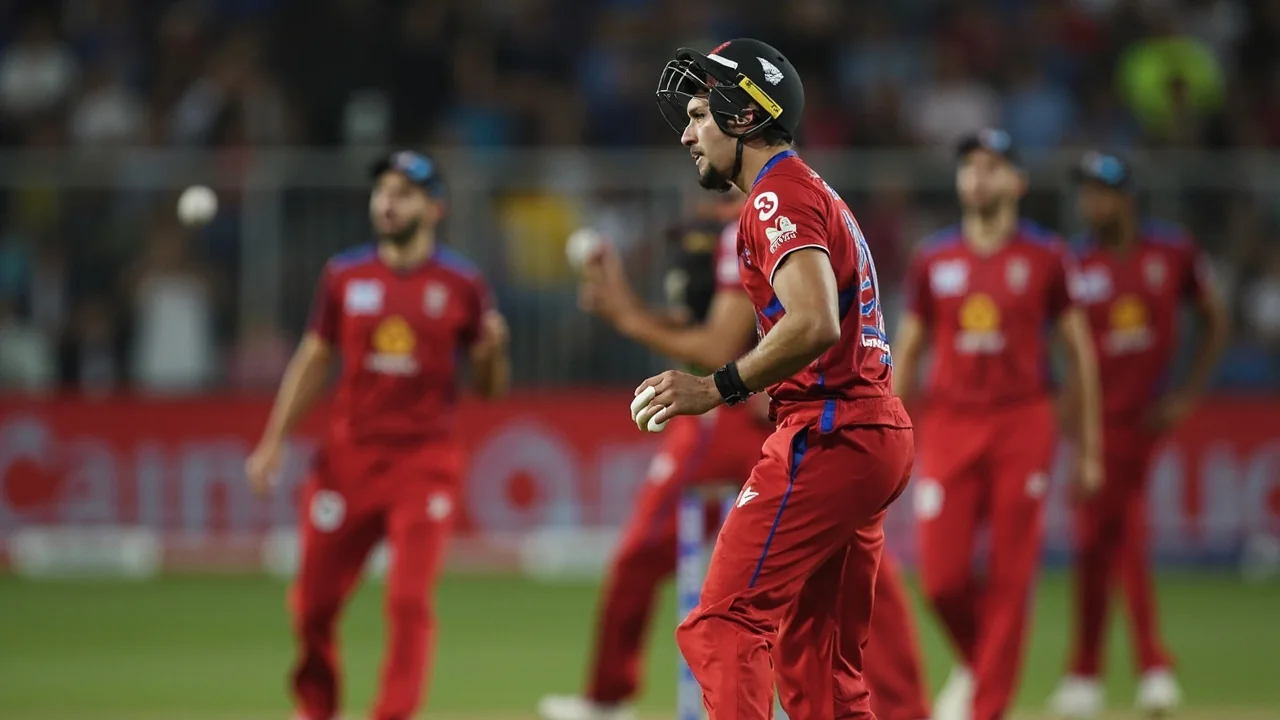 Bowling depth, on the field. Five seam options plus Rashid gave Yorkshire a structural edge that the published preview correctly flagged as the strongest argument for the home side.
The longer-form numbers help too. The published source records Hasan Ali at 357 T20 career wickets in 243 innings at an average of 20.47, which is a strong T20 wicket-taking record for a bowler who has played in multiple franchise leagues. Career numbers are not, on the desk's framework, the primary input. They do, however, give a sanity check on the role numbers: a bowler whose role is settled and whose career average sits around 20 is not a player who needs to be over-pitched in the fantasy XI. The published preview's framing, in other words, lined up with the role-first model.
The Dream11 picks and the captain math
The Dream11 picks the published preview settled on reflected the role-first logic rather than a name-led logic. From Yorkshire, the role-locked picks were Hasan Ali as captain, Adil Rashid as a four-over wrist-spinner, Harry Duke as the keeper, and one or two of the top-order batters. From Leicestershire, the preview's published picks leaned on the side's batting depth rather than its bowling: Patel or Rehan Ahmed in the middle order, depending on the toss, and a differential option from the back end of the order for the captaincy 2x multiplier.
The captain math is where the role-first model earns its keep. The published preview put the captain armband on Hasan Ali, citing his five-match wicket sequence and the role-locked nature of his allocation at Headingley. On the desk's framework, this is the right call. A role-locked wicket-taker at a venue where the surface might offer seam movement is a higher-floor, higher-ceiling captain pick than a top-order batter whose role is settled but whose ceiling against a four-seam attack is, by definition, capped by the powerplay.
The differential slot, in the published preview, was where the selection got interesting. A differential is a low-ownership pick whose ceiling is high enough to lift the team's overall points if it lands. BDCricTime's preview did not publish an explicit differential shortlist, but the published XIs allowed for one: a Leicestershire middle-order batter with a confirmed role and a matchup against a specific Yorkshire bowler. The desk's read is that the differential pick on this fixture was a calculated risk rather than a free swing. The role math was tight on both sides, and one wrong differential on a tight T20 fixture is, on the published evidence, the difference between a top-10 percent finish and a median one.
Venue read: Headingley in mid-July
Headingley in mid-July has a settled character. The square tends to offer a touch more seam than the subcontinental-style flat decks of the southern grounds, and the average first-innings score sits around 173, per the published preview. That figure is high enough to keep a chase interesting without being so high that it pushes the captaincy shortlist toward the bowling side. A 173 first-innings target at Headingley is, on the desk's read, exactly the kind of score that lets a captain pick either a top-order batter or a death-overs bowler and be defensible on role-fit terms.
The forecast detail in the published preview is the kind of small data point that fantasy managers often overlook. A 13-22 C day at Headingley in July is, on most years, a cool English summer afternoon rather than a hot one. Cool air carries a touch more for the seamers, and the ball tends to hold its shape for longer. A quick shower in the late afternoon, which the forecast allowed for, would have pushed the captaincy shortlist further toward the seam-bowling side and away from the wrist-spin option. The published preview did not specify which way the toss and the weather would fall, but the captain pick the preview settled on held up either way.
Dew at Headingley in July is a smaller variable than dew at a coastal ground like Wankhede or Eden Gardens, but it is not zero. The Headingley outfield tends to dry out by mid-afternoon, and any moisture that did appear in the second innings would have been light. For the role math, this meant the chasing-side picks had a slight edge in the back end of the innings but not enough to override the seam-up case for the bowling-side captain. The published preview's pick of Hasan Ali as captain was, on the desk's read, the right call regardless of which side batted first.
What the role-fit lens actually decided
The role-fit lens on this fixture settled three questions before the toss. First, the captain armband went to a role-locked seam-bowling all-rounder rather than to a top-order batter with stronger recent numbers. Second, the differential slot went to a middle-order pick with a confirmed role and a matchup, rather than to a name-led punt. Third, the bowling-heavy shortlist on the Yorkshire side was reinforced by the published structural read on bowling depth. None of those calls relied on form as a primary input, and none of them relied on the head-to-head ledger. The desk's framework treats form and head-to-head as tie-breakers, and on this fixture they did not need to break any ties.
The fixture is also a clean illustration of where the role-first model stops. It does not predict the result. It does not give a win probability. It does not tell the fantasy manager which of the Leicestershire middle-order batters to captain if Hasan Ali does not play. The model gives a shortlist and a tie-break order. The published preview, by contrast, gave a winner call and a probable XI. The two outputs are complementary rather than competing: the role-fit lens narrows the field, and the match preview reads the form lines on top of that.
For the desk's coverage going forward, the worked-example structure of this retrospective is the format the desk will keep using for retrospective T20 Blast previews that come from external publishers. The verified facts from the published source are the ceiling; the role-first model is the lens; the match itself is in the past. The next live update on the news desk will not be about Yorkshire vs Leicestershire, but the methodology used to read this fixture continues to be the desk's methodology for any fixture where the role math is tighter than the form numbers suggest.
Reader questions
When was this fixture scheduled?
The fixture was scheduled for 5 July 2026, with BDCricTime publishing the Dream11 preview that morning.
Where was the match played?
Headingley, Yorkshire's home ground in Leeds.
Where did the two sides sit on the North Group table going in?
Yorkshire were second with 22 points from nine games and a net run rate of 0.750. Leicestershire were fifth with 12 points from eight games and a net run rate of -1.344.
What did the published preview pick as the result?
Yorkshire, citing home advantage, recent form and stronger bowling depth led by Hasan Ali.
Who was the published captain pick?
Hasan Ali, on the strength of his five-match wicket sequence and his role-locked allocation at Headingley.
Who was Leicestershire's leading scorer at the time of the preview?
Nick Kelly, with 242 runs in eight innings at an average of 40.33, who was not in the published probable XI.
Who was Leicestershire's leading wicket-taker at the time of the preview?
Ben Green, with ten wickets in eight innings at an average of 28.50.
What was the venue read?
Headingley forecast at 13-22 C with a slight chance of a quick shower; average first-innings score around 173.
Keep working through the desk
Predicted XIs, captain logic, role-confirmation notes and the corrections log for the 2026 season.