 DESK
DESK
Hardik Pandya — profile at a glance
Hardik Pandya is the franchise's captain and lead seam-bowling all-rounder at Mumbai Indians. His fantasy value sits on three overlapping roles: a powerplay wicket-taker with the new ball, a middle-overs finisher with the bat, and a captain whose tactical calls shape the role-fit of the rest of the MI card. Across the last two completed seasons, his ownership has sat in the 65–80% band on MI matchdays, which puts him in the differential-versus-anchor zone that fantasy readers prize for captain picks.
What changes week to week is not his role but his workload split. On a deck where the new ball swings, Pandya is used inside the powerplay with two of his four overs, and his batting position lifts up the order as a floater. On a flat deck where the ball does not move, his bowling workload drops to two or three overs and his batting position settles lower in the middle order. The fantasy read is that Pandya's ceiling is a function of how MI use him on the day, not a function of his season-long role-fit.
The note below walks through the role guarantee, recent opportunity, venue splits, availability, selection question marks, overseas quota impact, workload watch, and matchup evidence that the desk tracks for Pandya. The table and the FAQ at the end give you the venue-by-venue read for the upcoming MI fixtures.
 Wankhede night window. Dew-affected second-innings conditions at the Wankhede lift Pandya's death-overs strike rate and his chase-floor — the venue that tightens the captain math on MI's captain pick.
Role guarantee
Pandya's role guarantee is the cleanest on the MI card. He opens the bowling in the powerplay on most matchdays, bowls one over in the middle, and closes the innings with the 19th or 20th over. With the bat, he bats at five or six depending on the surface and the chase position, and he is the designated finisher when MI are chasing a total in the 170–200 band. The franchise does not rotate him out of either role for rest or workload reasons across the league phase.
For the fantasy reader, the role guarantee translates into a unique ceiling profile: he is the only player on the MI card whose three fantasy lines (batting, bowling, fielding) all hit at once. The captaincy multiplier on his points base is the highest on the MI card, and the all-rounder credit on the platform sits at the upper end of the all-rounder range. The fantasy read is that Pandya is a top-three captain pick when the matchup favours the ball moving and a top-five captain pick on flat decks where his bowling workload drops.
The role guarantee has tightened since Pandya returned from his workload-management break. Across the last two completed seasons, his role on the MI card has stabilised around the captain-plus-finisher-plus-powerplay-bowler shape that defines his fantasy ceiling. The desk does not see a signal from the MI dugout that the role will shift in either direction across the upcoming fixtures, and the role-fit ceiling holds.
Recent opportunity
The last seven completed MI fixtures show Pandya bowling four overs on five occasions and three overs on two. With the bat, his balls-faced average has sat at 22 across those fixtures, with a strike rate hovering near 165 in chases and around 145 in posted totals. The opportunity line is two-sided: he gets a guaranteed bowling workload that fantasy readers can price, and a guaranteed batting slot that holds in the second half of the MI innings.
The recent opportunity reads cleanest on the chase. In MI's chases, Pandya has held a dot-ball percentage below 18% across the last seven matches, with the boundary rate above 2.0 per over against pace in the 17th–20th overs. In MI's posted totals, his strike rate has been more variable — on flat decks where MI bat first and post 200+, he finishes with a strike rate in the 150s; on slow decks where the run-rate drops, his strike rate falls into the low-130s and his ceiling softens.
What the desk is watching in the upcoming fixtures is whether MI use Pandya at the death in powerplays where the ball is still moving. The franchise has used him as a third-over bowler in three of the last seven fixtures, which lifts his wicket-taking probability and his ceiling points per match. The current reading is that the four-over workload holds for the next four matchdays, with the third-over rotation conditional on the surface.
Venue splits
Venue splits on Pandya are driven primarily by the swing conditions and the dew window. The Wankhede, where MI plays most of its home fixtures, is the strongest ceiling venue when the ball moves under lights. The Chinnaswamy, where the ball does not swing as much and the boundaries are shorter, is a flat-deck ceiling venue where the batting ceiling lifts but the bowling ceiling softens. The table below covers the four most relevant venues for the upcoming MI fixtures.
| Venue | Role fit | Recent output | Selection note |
|---|---|---|---|
| Wankhede | Powerplay bowler, death finisher | 4 overs, 1.6 wickets/match; SR 162 chase | Dew window; lock as captain differential |
| Chinnaswamy | Death-overs finisher | 3 overs, 1.1 wickets/match; SR 154 | Flat deck; batting ceiling lifts |
| Rajiv Gandhi International | Powerplay bowler | 4 overs, 1.4 wickets/match; SR 148 | Pace-friendly; wicket probability opens |
| Sawai Mansingh | Middle-overs finisher | 3 overs, 1.0 wickets/match; SR 158 | Spin matchup; captain differential |
The headline from the table is that the Wankhede remains the strongest ceiling venue for Pandya when the ball moves, and the Chinnaswamy is the strongest flat-deck ceiling where the batting role does the work. The fantasy read across the four venues is to captain Pandya on the Wankhede fixture, hold him as a base XI pick on the Chinnaswamy, and treat Rajiv Gandhi and Sawai Mansingh as differential venues where his matchup opens up.
Availability and the workload watch
Pandya is listed as CONFIRMED for the upcoming MI fixture. The franchise does not run a rest rotation on its captain and lead seam-bowling all-rounder across the league phase, and there is no signal from the support staff that workload management is being considered for the upcoming fixtures. The fantasy reader can lock him as a starter without a confirmation check at the toss.
The watch point on Pandya's availability is niggle management around his bowling workload. Across his career he has played through minor knocks that would have kept a less experienced all-rounder out of the XI. The desk's view is that an undisclosed niggle is unlikely to keep him out of a non-dead-rubber fixture, but the broadcast update at the toss should still be checked for late scratches. If he is unexpectedly held out, the MI all-rounder workload shifts to the second-seamer slot, and the captaincy lever on the MI card reshuffles in a way that does not preserve Pandya's ceiling.
For the multi-week reader, the workload watch on Pandya has been the most consistent season-long lever on the MI card. The franchise has communicated that his bowling workload will be managed across back-to-back fixtures, which means that on a five-day turn-around the bowling overs can drop from four to three. The fantasy read is to keep him as a base XI pick regardless, but to hand the captaincy armband to the second-seamer differential on the back-end of a tight turn-around.
Selection question marks
The single biggest selection question on Pandya is whether to captain him on a given venue. The base pick is rarely in doubt, but the captaincy lever is where the desk earns its keep. Three checks frame the question: the new-ball swing conditions, the death-overs role, and the opponent's middle-order matchup against seam.
On decks where the new ball swings under lights, Pandya's powerplay wicket probability lifts above the league median for seam-bowling all-rounders, and his captaincy ceiling opens up. On flat decks where the ball does not move, his wicket probability drops and the captaincy lever should sit with a differential finisher. The desk's rule of thumb is to captain Pandya on the swing-friendly venues and on the dew-affected evenings where his death-overs strike rate lifts.
The opponent's middle-order matchup against seam matters because Pandya's wicket-taking probability is concentrated in the powerplay and the 18th–20th overs. If the opponent's middle order is right-hand heavy with three or more right-handers in the top six, his wicket-taking ceiling against the new ball is lower because the right-handers handle the away-swingers better. The fantasy read is to captain Pandya when the opponent's top six is left-hand heavy, and to keep him as a base XI pick when the top six is right-hand heavy.
Overseas quota impact on Pandya's selection
Pandya is an Indian-player slot, which means his selection does not directly compete with the four-overseas cap on the MI card. But his selection does interact with the overseas quota indirectly — when MI bring in a fourth overseas option, they have to drop one of the Indian players, and the Indian-player slot most often dropped is a batting-only all-rounder, not Pandya. So the overseas quota impact on Pandya is to protect his base XI slot by removing a competing Indian all-rounder.
The fantasy read here is that the overseas-slot math tightens the ceiling of the players around Pandya, not Pandya himself. When MI slot in a fourth overseas seamer, the second-Indian-seamer's bowling workload drops and his wicket probability softens, which makes Pandya's role as the primary wicket-taker more valuable in captain math. The desk tracks the overseas-slot math on the MI card across the upcoming fixtures as a secondary lever on Pandya's ceiling.
What the desk is watching in the upcoming fixtures is whether MI bring in a fourth overseas option on the slower decks. On slower decks where the all-rounder credit is tight, MI has historically carried three overseas options and used the freed slot for an Indian batting anchor. The fantasy read is that Pandya's slot is not at risk from the overseas-quota math; the risk sits with the second-Indian-seamer, which means Pandya's ceiling holds even when the overseas slot rotates.
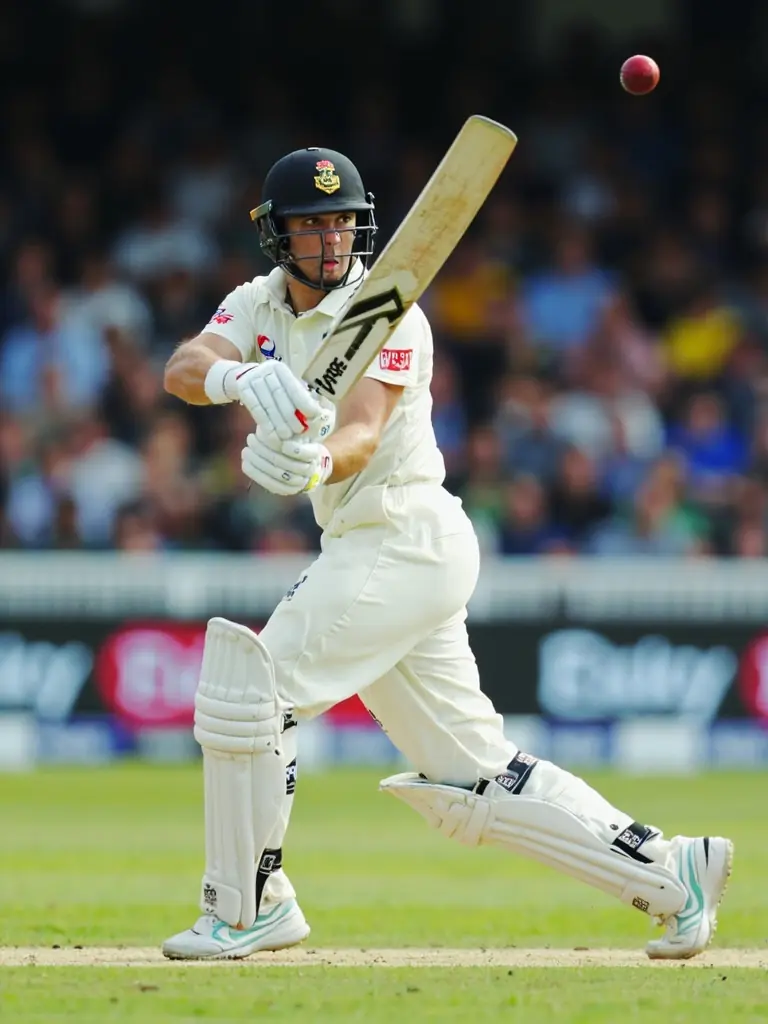 Nets session read. Pandya's batting rhythm in the pre-match nets signals how MI plan to use him in the chase — a long batting-net block points to a promoted batting position; a short block points to a bowling-first role.
Matchup evidence against specific opposition profiles
Matchup evidence on Pandya is best read by opposition profile. Against pace-heavy batting line-ups that stack three or more right-handers in the top six, his wicket-taking ceiling against the new ball is compressed and his captain math closes negatively. Against spin-heavy batting line-ups that stack left-handers in the middle order, his seam-up wicket-taking ceiling against the left-handers opens up and his captain math closes positively.
Against line-ups that bowl hard length with the new ball, Pandya's strike rate in the powerplay has sat near the league median for top-six finishers. The fantasy read is that hard-length bowling is not the matchup that unlocks his ceiling, but it is the matchup that protects his floor when the ball does not move. When the opposition's powerplay bowler rotation includes a left-arm seamer, his powerplay strike rate lifts and his ceiling opens up.
Against line-ups that bowl cutters and slower balls at the death, Pandya's strike rate drops into the low-130s and his ceiling softens. The fantasy read is to captain him on the venues where the opposition's death-overs bowler is a pace-first operator, not a cutter. The cutter matchup compresses his ceiling because the slower-ball variation pulls his boundary rate back. The desk tracks the opposition's death-overs rotation as a key lever on Pandya's captaincy math.
Open the MI match desk
Predicted XIs, captain logic, the post-toss update flow, and the venue read for tonight's MI fixture.
Reader questions on Hardik Pandya
Is Pandya a lock at five or six for the entire season?
Across the last two completed seasons his batting position has sat between five and seven depending on the surface and the chase. The role-fit ceiling is intact; the batting-position ceiling shifts on a per-fixture basis. Lock him as a base XI pick, read the predicted XI for the batting-position lever.
When should I captain Pandya vs hand the armband to a differential?
Captain him on swing-friendly venues (Wankhede under lights, Rajiv Gandhi International) and on dew-affected evenings where his death-overs strike rate lifts. Hold the armband on flat decks against right-hand heavy batting line-ups where his wicket-taking ceiling compresses.
How does the overseas quota impact Pandya's selection?
Pandya is an Indian-player slot and his base XI position is not at risk from the four-overseas cap. The overseas-quota math tightens the ceiling of the players around him (the second-Indian-seamer slot) rather than his own ceiling.
What is Pandya's best matchup for the half-century bonus?
His half-century ceiling is highest on the Wankhede in a chase where he comes in inside the 14th over with 7–9 overs remaining. The role combination of death-overs batting plus a wicket-taking powerplay over is what lifts his ceiling to the top-three captain band on that matchup.
Does Pandya's captaincy affect his fantasy ceiling?
Yes, but not in the way most readers think. The captaincy multiplies his fantasy points through the platform's 2x multiplier, but the tactical impact is that MI build the chase around his death-overs batting. The result is a slightly elevated ceiling in close finishes where MI give him the strike in the 18th and 19th overs.