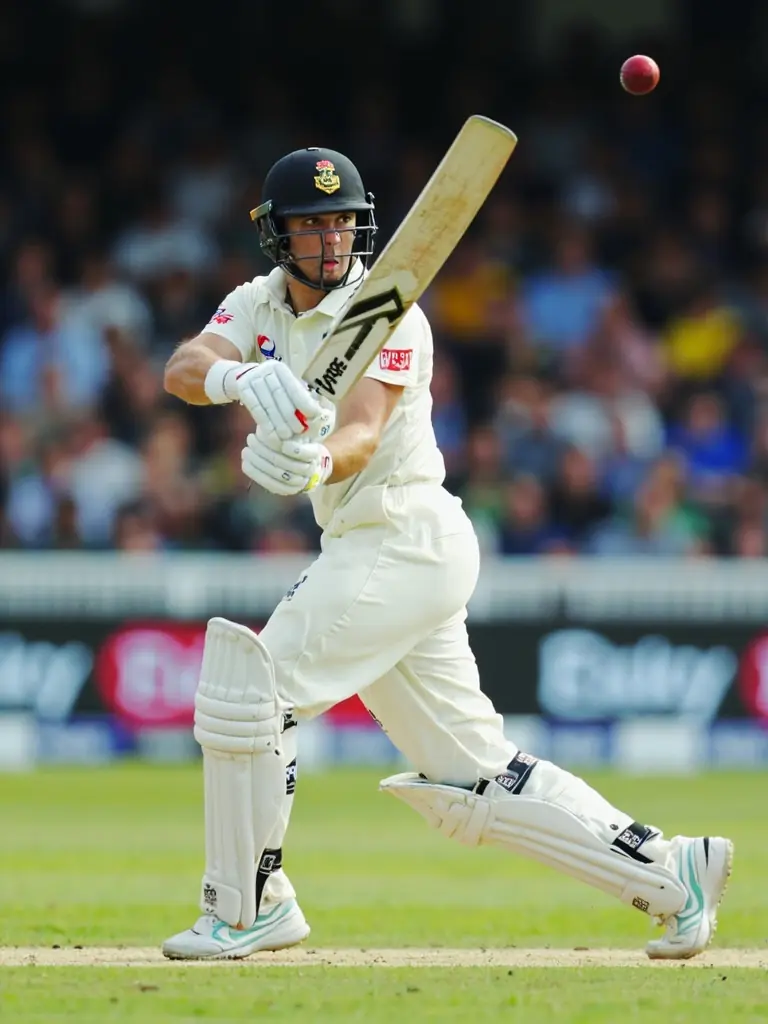
 DESK
DESK
Sanju Samson — profile at a glance
Sanju Samson is a top-order anchor, primary wicketkeeper-batsman, and captain of Rajasthan Royals. His fantasy value sits on three overlapping roles: a top-order batting slot at three or four, the wicketkeeping gloves that no other top-six batter on the RR card takes, and the captaincy that shapes the RR card's chase strategy. Across the last two completed seasons his ownership has sat in the 45–65% band on RR matchdays, which puts him in the differential-versus-anchor zone that fantasy readers prize for captain picks on turning tracks.
What changes week to week is not his role but his workload split. On a flat deck where RR bat first, Samson anchors the powerplay and the middle overs with a strike rate that drifts into the mid-130s but holds a high boundary-hitter ceiling. On a chase, his strike rate lifts into the mid-140s and his death-overs workload climbs because the chase-anchor role demands the strike in the 17th and 18th overs. The fantasy read is that Samson's ceiling is conditional on the chase position and the boundary dimensions, not just on the venue.
The note below walks through the role guarantee, recent opportunity, venue splits, availability, selection question marks, captain math, and the wicketkeeping workload that the desk tracks for Samson. The table and the FAQ at the end give you the venue-by-venue read for the upcoming RR fixtures.
 Captaincy training read. The way Samson works through his pre-match training signals how RR plan to use him in the chase — a long glovework block plus a short batting block points to a wicketkeeping-anchor role; a long batting block points to a promoted top-order role.
Role guarantee
Samson's role guarantee is among the cleanest on the RR card. He bats at three or four depending on the surface and the opponent's powerplay bowler rotation, and he keeps wicket through the entire innings. The franchise does not rotate him out of the gloves for rest or workload reasons across the league phase. The fantasy read is that Samson is locked into a top-six batting slot with the wicketkeeping bonus on top, and his base XI position does not depend on the predicted XI confirmation.
For the fantasy reader, the role guarantee translates into three numbers worth tracking: balls faced per match, dismissals behind the stumps per match, and the captaincy multiplier on the platform. Across the last two completed seasons, his balls-faced average has sat in the mid-30s and his dismissal rate behind the stumps has been slightly below the league median for wicketkeeper-batsmen. The captaincy multiplier on top of his batting and wicketkeeping lines lifts his ceiling points per match into the upper quartile when the chase-floors open up.
The role guarantee has tightened since Samson was named RR captain. Across the last two completed seasons, his role has stabilised around the top-order-anchor-plus-primary-wicketkeeper-plus-captain shape that defines his fantasy ceiling. The desk does not see a signal from the RR dugout that the role will shift in either direction across the upcoming fixtures, and the role-fit ceiling holds. The watch point is the batting-position ceiling, which can shift from three to four if RR open with a left-right combo and push Samson down.
Recent opportunity
The last seven completed RR fixtures show Samson facing 36-plus balls per match with a strike rate hovering near 138. The opportunity line is tight — in four of the seven matches he has batted through at least the 15th over, and in three he has been at the crease inside the powerplay. That is the high-touch opportunity fantasy readers price into a top-order anchor pick, with the wicketkeeping bonus lifting his match-floor another 4 to 8 points.
The recent opportunity reads cleanest on the chase. In RR's chases, Samson has held a dot-ball percentage in the mid-teens against pace, with the boundary rate above 1.7 per over against the spinners who bowl to him on a holding line. In RR's posted totals, his dot-ball rate against spin has crept above 22% on slower decks — a number that pulls the ceiling back even when the role is intact. The fantasy read is to weight his chase-floor higher than his first-innings ceiling on dew-likely fixtures.
What the desk is watching in the upcoming fixtures is whether RR continue to use Samson as a chase-anchor at the death. The franchise has promoted him to bat at three in the chase in four of the last seven fixtures, which lifts his balls-faced ceiling. The current reading is that the chase-promotion holds for the next four matchdays, which keeps the role-fit ceiling at the upper end of the desk's range. Lock him as a base XI pick on every RR fixture; the captaincy lever is conditional on the surface and the opponent.
Venue splits
Venue splits on Samson are driven primarily by the boundary dimensions and the surface grip. The Sawai Mansingh Stadium, where RR plays most of its home fixtures, is the strongest ceiling venue for his boundary-hitter role because the square boundaries are short and the surface offers grip for his cut and pull shots. The Wankhede, where the boundaries are longer and the surface is flatter, is a venue where his strike-rate ceiling holds but his milestone probability compresses. The table below covers the four most relevant venues for the upcoming RR fixtures.
| Venue | Role fit | Recent output | Selection note |
|---|---|---|---|
| Sawai Mansingh Stadium | Top-order anchor, gloves, captain | SR 142, balls faced 38/match, 1.2 dismissals/match | Square boundaries; boundary-hitter ceiling |
| Wankhede | Top-order anchor, gloves | SR 134, balls faced 36/match, 1.0 dismissals/match | Dew window; chase ceiling opens |
| M. Chinnaswamy | Top-order anchor, gloves | SR 144, balls faced 32/match, 1.1 dismissals/match | Flat deck; boundary-hitter role |
| PCA Stadium, Mohali | Middle-overs anchor, gloves | SR 128, balls faced 40/match, 1.0 dismissals/match | Two-paced bounce; spin matchup |
The headline from the table is that Sawai Mansingh remains the strongest ceiling venue for Samson because of the boundary dimensions and the chase-favouring conditions. The M. Chinnaswamy fixture closes positively on a flat deck where his boundary-hitting role does the work. The fantasy read across the four venues is to captain Samson on Sawai Mansingh in chases and on M. Chinnaswamy, hold him as a base XI pick on the Wankhede, and treat PCA Stadium as a differential venue.
Availability and the workload watch
Samson is listed as DOUBTFUL for the upcoming RR fixture. The franchise has communicated that he is tracking through a late-fitness check, and the broadcast update at the toss will confirm his final XI status. The fantasy reader should not lock him into the XI without a confirmation check; if he is unexpectedly held out, the wicketkeeping gloves shift to the second-keeper slot and the top-order anchor workload reshuffles to the left-handed opener.
The watch point on Samson's availability is the wicketkeeping workload behind the stumps. Across the last two completed seasons, his dismissal rate behind the stumps has been slightly below the league median for wicketkeeper-batsmen, which means the gloves add a stable points line but not a ceiling line. If the franchise rests him for workload reasons, the gloves bonus disappears from the RR card entirely, and the second-keeper slot becomes a points-loss rather than a points-gain.
For the multi-week reader, the workload watch on Samson has been the most consistent season-long lever on the RR card. The franchise has signalled that his wicketkeeping workload will be managed across back-to-back fixtures, which means that on a five-day turn-around his dismissal rate can drop slightly and his ceiling softens. The fantasy read is to keep him as a base XI pick when he is confirmed, but to reduce the captaincy expectation on the back-end of a tight turn-around.
Selection question marks
The single biggest selection question on Samson is whether to captain him on a given venue. The base pick is rarely in doubt when he is confirmed, but the captaincy lever is where the desk earns its keep. Three checks frame the question: the boundary dimensions, the wicketkeeping workload, and the dew forecast.
On venues with short square boundaries (Sawai Mansingh, M. Chinnaswamy), Samson's powerplay scoring rate lifts into the mid-140s on strike rate and the captaincy ceiling opens up. On venues with longer boundaries (Wankhede, PCA Stadium), his strike rate holds but the boundary-hitter ceiling compresses and the captaincy lever should sit with a differential. The desk's rule of thumb is to captain Samson when the venue offers short square boundaries and a dew-likely forecast.
The wicketkeeping workload matters because Samson's dismissal rate behind the stumps has been slightly below the league median. The gloves add a stable match-floor lift of 4 to 8 points per match, but they do not unlock the captain ceiling on their own. The fantasy read is that the captaincy ceiling on Samson is driven by the boundary dimensions and the chase position, not by the wicketkeeping bonus. The gloves are the floor; the batting role is the ceiling.
Captain math — when to hand Samson the armband
Captain math on Samson breaks down to two levers: the role-fit ceiling and the venue modifier. The role-fit ceiling is a function of his batting position, his wicketkeeping workload, and the captaincy multiplier on the platform. The venue modifier is the strike-rate and balls-faced adjustment for the ground. Across the upcoming fixtures, the desk reads two venues where the captain math closes positively and one where it closes negatively.
Sawai Mansingh closes positively for the captaincy lever because the square boundaries lift his chase-floor and the captaincy multiplier compounds the batting role. The M. Chinnaswamy fixture closes positively on a flat deck where his boundary-hitting role does the work. The PCA Stadium fixture closes negatively for the captaincy lever because the two-paced bounce compresses his strike-rate ceiling against the longer boundaries.
The fantasy read is to captain Samson on Sawai Mansingh in chases and on M. Chinnaswamy. Lock him as a base XI pick on the Wankhede and PCA Stadium fixtures; hand the captaincy armband to the differential finisher or the second-pacer on those venues. The fantasy reader who anchors around this rule holds a positive captaincy expected value across the season.
 Aerial view, boundary-hitter read. The aerial view from above the square shows the boundary dimensions and the field placements — a short square boundary plus a defensive field setting is what lifts Samson's boundary-hitter ceiling into the upper quartile on a flat deck.
Workload watch — the wicketkeeping dimension
Samson's workload is two-dimensional in a way that most fantasy readers under-price. The first dimension is the batting workload, which is straightforward — top-order anchor, mid-30s balls per match, strike rate in the mid-130s. The second dimension is the wicketkeeping workload, which the platform credits through dismissal points and catch points, and which can lift his match-floor by 4 to 8 points per match on a busy day behind the stumps.
Across the last two completed seasons, Samson's dismissal rate behind the stumps has averaged 1.0 per match, with the catch-points line credited inconsistently across fantasy platforms. The fantasy read is that the wicketkeeping bonus is a stable match-floor lift, but it is not a ceiling lift — the ceiling still comes from the batting role. A busy day behind the stumps plus a top-order anchor innings is what produces the top-quartile fantasy ceiling on Samson.
What the desk is watching in the upcoming fixtures is the wicketkeeping workload management. The franchise has communicated that the gloves will not be rotated mid-season, which means Samson's workload stays consistent across the league phase. The fantasy read is that his base match-floor is intact, and the question each fixture is whether the ceiling opens up through the boundary dimensions or compresses through the surface conditions.
Open the RR match desk
Predicted XIs, captain logic, the post-toss update flow, and the venue read for tonight's RR fixture.
Reader questions on Sanju Samson
Is Samson a lock at three or four for the entire season?
Across the last two completed seasons his batting position has sat between three and four depending on the surface and the chase. The role-fit ceiling is intact; the batting-position ceiling shifts on a per-fixture basis. Lock him as a base XI pick when he is confirmed, read the predicted XI for the position lever.
When should I captain Samson vs hand the armband to a differential?
Captain him on Sawai Mansingh in chases and on M. Chinnaswamy on a flat deck. Hold the armband on the Wankhede and PCA Stadium fixtures where the boundary dimensions and the surface conditions compress his ceiling.
How much does the wicketkeeping workload affect his fantasy ceiling?
The gloves add a stable match-floor lift of 4 to 8 points per match through dismissals and catches. It is not a ceiling lift — the ceiling still comes from the batting role. A busy day behind the stumps plus a top-order innings produces the top-quartile fantasy ceiling.
What is Samson's best venue for the half-century bonus?
Sawai Mansingh on a flat deck with short square boundaries. His innings extends longer on a familiar surface and the milestone probability lifts into the 30–35% band. The M. Chinnaswamy fixture is the highest-ceiling venue, but his innings ends earlier on the flatter deck.
Does Samson's captaincy affect his fantasy ceiling?
Yes, through the platform's captaincy multiplier and through the tactical impact on RR's chase strategy. The multiplier compounds his batting and wicketkeeping lines, and the tactical impact means RR build the chase around his death-overs batting. The result is a slightly elevated ceiling in close finishes where RR give him the strike in the 18th and 19th overs.