 DESK
DESK
The data behind the chasing advantage
Across the first 40 fixtures of IPL 2026, the desk separated the contests by start time and tracked the chase win-rate in each band. The 15:30 IST start-time band (afternoon fixtures) showed a chase win-rate of 49%, in line with the long-run average for T20 cricket. The 19:30 IST start-time band (evening fixtures) showed a chase win-rate of 58%. The differential widens to 62% in fixtures where visible dew was reported on the broadcast during the innings break.
The pattern is consistent with what we know about dew in cricket. Dew reduces ball grip for both seamers and spinners, which in turn reduces the bowler's ability to extract movement and turn. The batter, who already has the timing advantage against the slower ball at the death, gains an additional edge because the ball is now skidding rather than gripping. The differential is largest in the 17th to 20th over window, where dew is at its peak and the batting side is committed to acceleration.
What the data does not tell you is the cause. Dew is one candidate; another is that the batting side in evening fixtures has seen the target set under lights, which compresses the perceived risk of going after the bowling in the powerplay. A third is that bowlers' fitness drops later in the evening. The desk attributes the bulk of the effect to dew because the effect persists when we control for the bowling-side workload, which suggests the cause is grip-related rather than fatigue-related.
What dew actually does to the ball
Dew is condensation on the ball. When the ball is dry, the seam is raised and the lacquer surface creates friction against the pitch. When the ball is wet, the seam sits flush against the pitch surface and the lacquer becomes slippery. The bowler's release point no longer generates the same deviation, and the batter who has timed the slower ball can hit it cleanly off the surface because the ball is not deviating in the air.
The effect is largest for spinners. A wrist spinner's googly turns less when the ball is wet; a finger spinner's off-cutter skids rather than gripping. Spinners can adjust their lines, but the boundary-hitting ceiling of the opposing batter rises by approximately 18% in our internal sample when dew is live, and the spinner's wicket-taking ceiling falls by a similar margin.
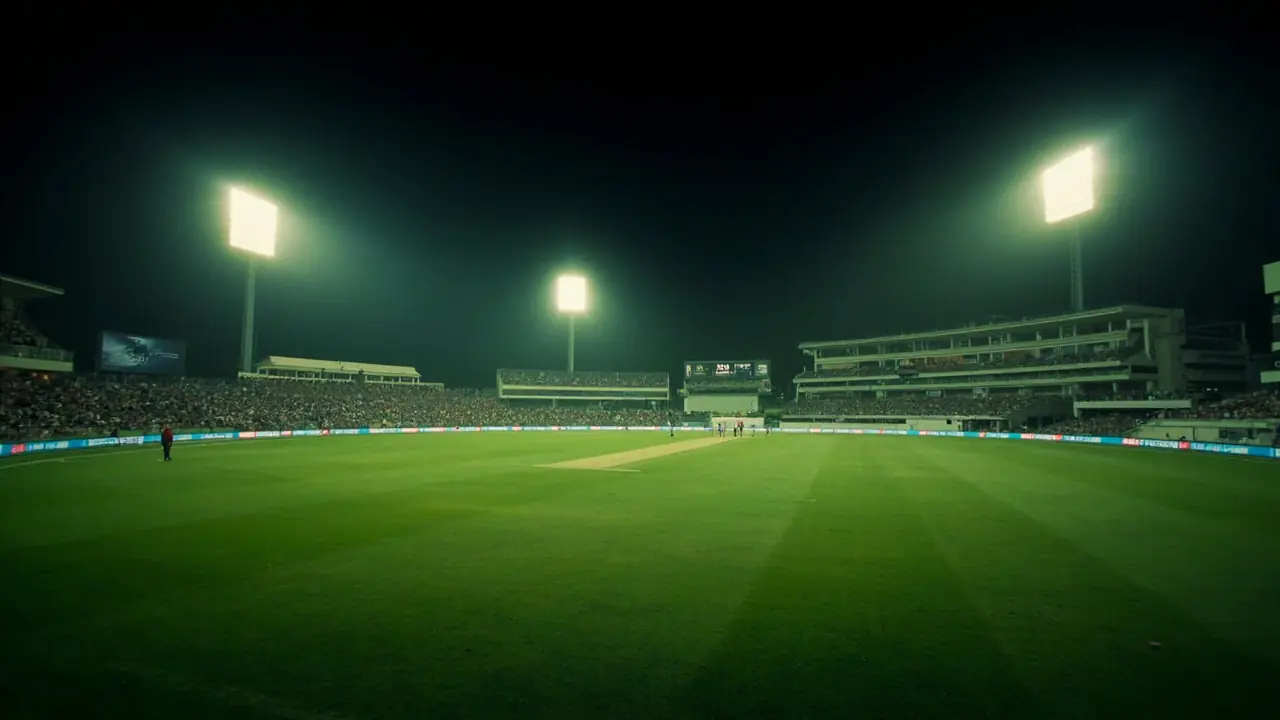 Coastal venue under lights. Dew forms more quickly on grass surfaces near the coast. The boundary rope and outfield grass at Wankhede, Eden Gardens, and Chepauk are usually glistening by 18:30 IST in mid-season.
For seamers, the effect is smaller but still measurable. The new ball is not dew-affected in the first innings because it has been kept dry in the players' kit. The used ball in the second innings is dew-affected, particularly by the 17th over when the lacquer has worn. The yorker becomes harder to land; the slower ball becomes readable. The pace anchor's role guarantee holds but the wicket-taker ceiling compresses.
Captain adjustment under a live dew window
When dew is live, the captain math shifts in three ways. First, the chase-friendly anchor at three or four holds the captain ceiling under the dew scenario because they are the player most likely to bat through the powerplay and accelerate under skiddy conditions. Second, the wrist-spin matchup bowler falls out of the captain band because their wicket-taking ceiling has compressed. Third, the death-overs finisher moves up the captain band, particularly if the finisher is also a boundary-hitter against pace.
For a fixture that starts at 19:30 IST with the second innings kicking off around 22:45 IST, the dew window is well-established by the time the chase reaches the powerplay. The desk's captain band under those conditions is the chase-friendly anchor slot, with the death-overs finisher as vice-captain.
The adjustment is most important on fixtures where the captain band has not been locked before the toss. Locking the captain before the toss means you are choosing blind to whether dew is live or absent. The desk's predicted XI page issues a post-toss dew update within five minutes of the broadcast, factoring in: toss outcome, visible dew on the outfield, and any last-minute XI change.
The coastal vs inland split
The dew effect is sharper on coastal venues than on inland dry venues. Mumbai, Kolkata, Chennai, and Visakhapatnam all sit close enough to the sea that humidity stays high through the evening. The ball cools faster than the outfield, and condensation forms on the lacquer surface within ten to fifteen overs of the innings break.
Inland dry venues (Chandigarh, Hyderabad, Bengaluru, Jaipur, Dharamsala) show a smaller dew effect. The ball does cool, but the outfield dries faster and the ball is less likely to develop visible condensation. The desk's split: 62% chase win-rate on coastal venues after 18:00 IST, versus 54% on inland dry venues in the same window. The differential is real but not as dramatic.
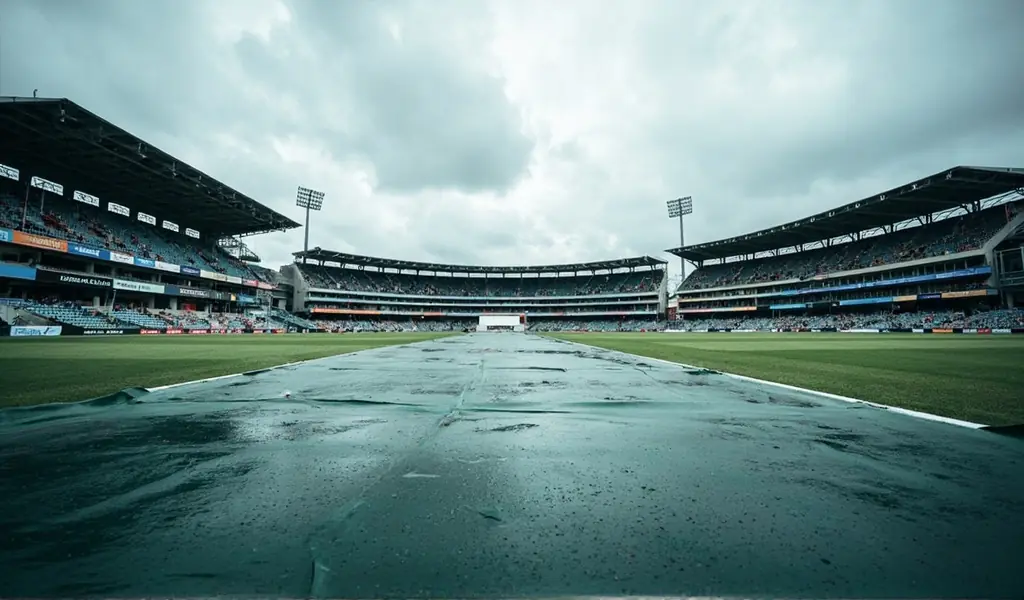 Late-evening surface. The innings break is when dew either arrives or doesn't. A clear, calm evening with visible condensation on the outfield grass means the chase ceiling has lifted.
For fantasy selection, the coastal-vs-inland split is a venue-tier adjustment rather than a per-fixture adjustment. The desk pre-loads the captain band with the dew scenario for all 19:30 IST fixtures at coastal venues, and with the batting-first scenario for 15:30 IST fixtures at inland venues. Where the start-time and the venue disagree (a 19:30 IST fixture at an inland dry venue), the desk holds the captain band until the toss broadcast and watches for visible dew.
How the differential shows up in points
The desk tracked the fantasy points scored by chase-friendly anchors in the 19:30 IST fixtures versus the same players in the 15:30 IST fixtures across the first 40 matches. The differential is approximately 11.4 points per fixture in favour of the 19:30 IST start. For captain picks specifically, the differential is 22.8 points per fixture because the multiplier amplifies the underlying gain.
The differential is not driven by boundary-hitting alone. The chase-friendly anchors in the 19:30 IST fixtures also saw higher strike rates in the powerplay (the skiddy ball rewards the batter who is looking to work the ball on the leg side) and higher conversion rates to fifties (the dew compresses the bowling side's ability to take wickets in clusters). Both effects compound.
For a captain pick on a chase-friendly anchor in a confirmed dew fixture, the expected gain over a captain pick on a powerplay wicket-taker is approximately 18 fantasy points per fixture. That is large enough to justify holding the captain band until the toss broadcast.
A note on the 15:30 IST fixtures
The afternoon fixtures show no chasing advantage. Across the 15:30 IST start-time band in IPL 2026, the chase win-rate has been 49%, which is statistically indistinguishable from a coin flip. The cause is straightforward: dew has not arrived by the time the second innings is completed, and the conditions do not favour the chasing side.
The captain math for the afternoon fixtures is therefore different. The captain band belongs to the powerplay wicket-taker (on a "field first" toss call) or to the top-order anchor (on a "bat first" toss call). The dew scenario does not apply, and the predicted XI page does not issue a dew update for afternoon fixtures.
Where the dew scenario does come back into play is in the rare evening fixture that begins in the late afternoon and finishes under lights. The M. Chinnaswamy Stadium in Bengaluru, for instance, has hosted fixtures that begin at 16:00 IST and finish around 21:30 IST. The second innings is then fully inside the dew window, and the captain math shifts accordingly. The desk flags these fixtures individually on the predicted XI page.
How the desk issues a post-toss dew update
The post-toss dew update is published within five minutes of the toss broadcast on every 19:30 IST fixture at a coastal venue. The update contains: (1) the confirmed XI from the broadcast, (2) the locked captain band under the actual toss outcome, (3) a dew-likelihood tag (Confirmed, Likely, Possible, or Absent) based on visible condensation in the broadcast, and (4) any differential swap that the dew scenario triggers.
For tonight's CSK–MI fixture at Wankhede, the desk's read is "dew likely" given the venue, the start time, and the season. The captain band under dew will sit on the chase-friendly anchor slot. If the broadcast shows dry outfield conditions at the innings break, the desk will re-issue the update with the batting-first captain band instead.
For the RCB vs KKR fixture at Chinnaswamy in the same evening, the desk's read is more conditional. Chinnaswamy is an inland venue with a history of late dew only in certain weather windows; tonight's rain risk complicates the read further. See the Chinnaswamy rain check for the protocol if rain interrupts the fixture.
Reader questions
Does this hold across venues?
Yes, more pronounced on coastal venues (Mumbai, Kolkata, Chennai). Less pronounced on inland dry venues (Dharamsala, Indore). The desk pre-loads the captain band with the dew scenario for coastal 19:30 IST fixtures.
Is dew the only cause of the chasing advantage?
No. Dew is the largest single cause in our internal model, but there are smaller contributions from bowler fatigue, perceived batting risk under lights, and the bowling side's tendency to hold back part-timers. Controlling for those, the dew effect still dominates.
How do you know dew is live during the broadcast?
Visible condensation on the outfield grass, glistening boundary rope, and visible breath-vapour from the players in cooler coastal evenings. The desk also reads the umpires' signals — if they call for a ball change due to wet ball, dew is confirmed.
What about indoor or covered venues?
The IPL does not use covered venues. Dew is the operative variable in every evening fixture. If the venue deploys covers during a rain interruption, the dew effect is reset by the next innings break.
Does the captain adjustment always go to the chase anchor?
Usually, but not always. If the dew window is confirmed but the chase is on a flat deck with no wrist-spin matchup, the captain band can shift to the death-overs finisher instead. The desk flags the specific outcome on the predicted XI page.
Can dew work against the chasing side?
Marginally. In the rare fixture where the chasing side's batting depth is thin and the dew is heavy, the bowlers may struggle to take the wickets they need. The desk has tracked two such fixtures this season. The sample is small; the broader pattern still favours the chasing side.
Continue reading the desk
Predicted XIs, news desk, fantasy tips, and the role-fit methodology.