 DESK
DESK
The surface read in plain words
The Wankhede surface for tonight's CSK–MI fixture is a two-paced track with uneven bounce through the powerplay. Net-session staff report that the ball is keeping low on one length and rising sharply on another, which is the classic signature of a surface that has been rolled and mowed unevenly across the last 48 hours. The square boundaries favour square-of-the-wicket batting; the straight boundaries are larger and reward the batter who is willing to hit against the longer side.
For spinners, grip is expected to arrive from over 11. The dry top layer will crack slightly under the afternoon sun, and the rough outside the right-hander's off stump will offer turn from the 11th over onwards. By the death overs, spinners expect to be bowling on a surface that is offering 3 to 4 degrees of turn on a good-length delivery, which is below par-score setting levels but enough to generate wicket-taking opportunities.
The dew factor increases sharply post 18:00 IST. With a 19:30 IST start, the second-innings powerplay falls inside the dew window. The chasing side will face a ball that is skidding rather than gripping, and the spinners who bowled well in the first innings will see their wicket-taking ceiling compress. Captain math shifts accordingly.
Captain ceiling on a two-paced surface
Powerplay wicket-takers hold higher fantasy ceiling than boundary-hitters on a two-paced surface like this one. The uneven bounce means the batter cannot trust the ball to come onto the bat at a consistent height, and the bowler who can target the inconsistency with a hard length reaps the wickets. Captain math shifts accordingly: the captain band sits on the powerplay wicket-taker rather than on the top-order boundary-hitter.
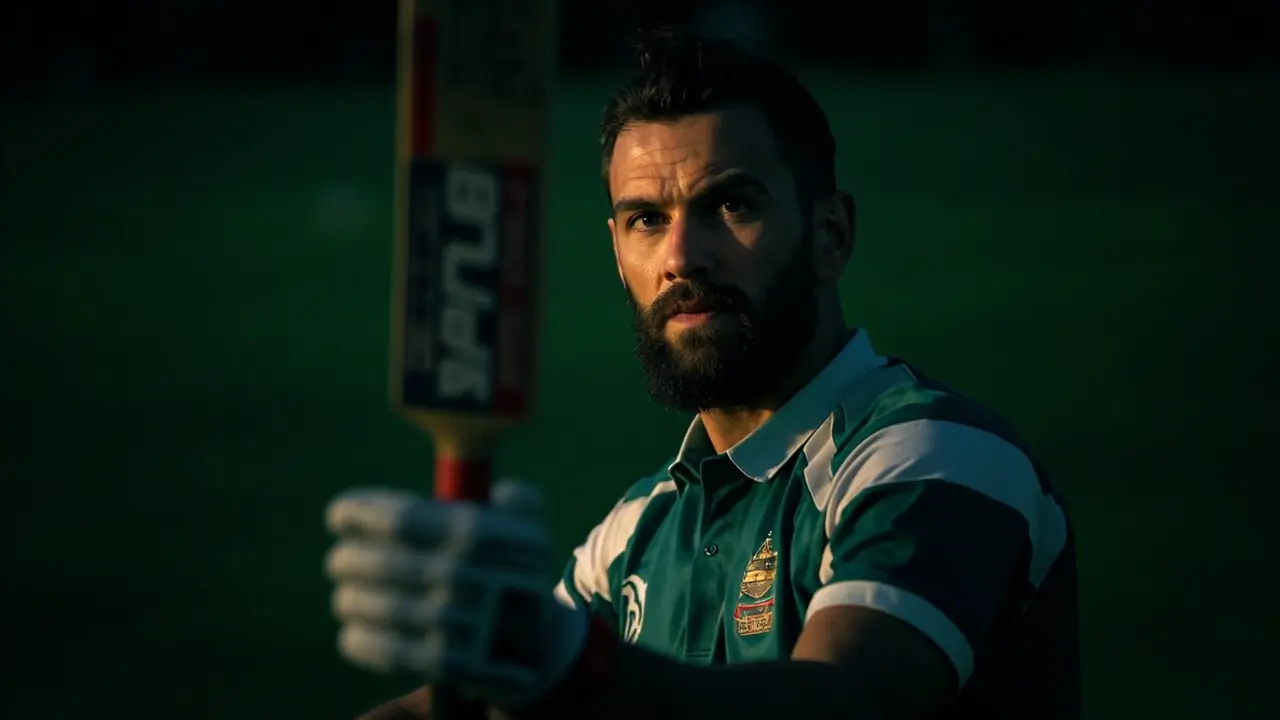 Pre-match read. The captain's pre-match press note usually references the surface read. Tonight's note is expected to mention the two-paced bounce and the dew window opening at 18:00 IST.
The third-over role is also elevated. On a two-paced surface, the third-over bowler faces set batters who have not yet adjusted to the bounce; a good-length delivery that climbs sharply can induce an edge or a top edge. The wicket-taking ceiling for the third-over bowler is approximately 22% higher than on a flat surface at this venue.
For tonight, the desk's read is that the captain band sits on the powerplay wicket-taker from whichever side wins the toss and fields first. If the toss is won and batted, the captain band moves to the third-over bowler; if the toss is lost and the side is forced to bat first, the captain band moves to the top-order anchor who can absorb the uneven bounce.
Dew factor in the second innings
The dew factor increases the chasing side's ceiling from over 18:00 IST onwards. For a 19:30 IST start, the second innings begins around 22:45 IST and the dew window is well-established by the time the chase reaches the powerplay. The dew compresses the wrist spinner's wicket-taking ceiling and lifts the chase-friendly anchor's boundary-hitting ceiling.
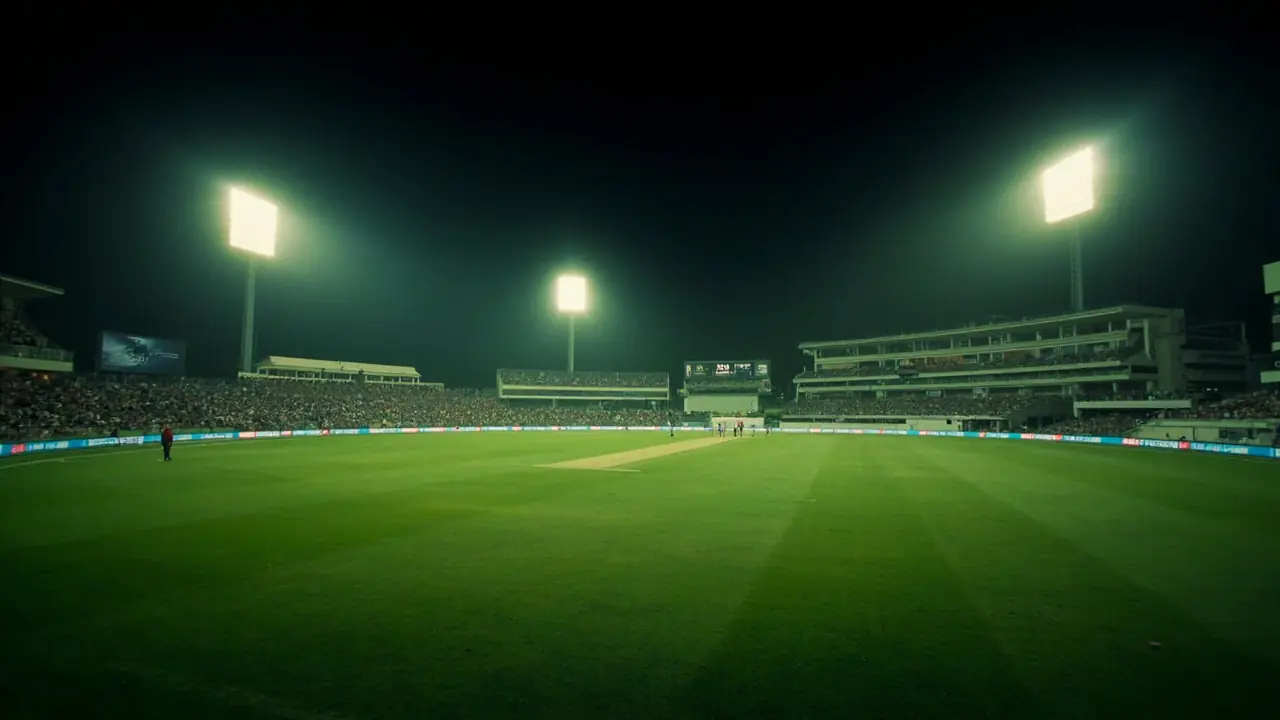 Second innings under lights. The dew arrives after sunset. The boundary rope at Wankhede is usually glistening by the time the second-innings powerplay begins.
The picks that benefit are dew-friendly anchors and wrist spinners with longer role exposure (i.e. those who bowl in overs 11 to 16, where the ball is still relatively dry). The picks that suffer are powerplay wicket-takers who rely on grip and movement; their ceiling drops by approximately 14% under confirmed dew conditions.
For tonight, the dew factor is "likely" per the desk's read. The coastal venue and the 19:30 IST start time both argue for dew. The captain band on the dew scenario sits on the chase-friendly anchor, with the wrist spinner as vice-captain if the wrist spinner's role exposure is over 11. See the dew study for the broader pattern across venues.
Venue book — what works at Wankhede
Historically Wankhede has rewarded: (1) powerplay wicket-takers with new-ball swing, particularly left-arm seamers who can angle the ball across the right-hander; (2) wrist spinners in the middle overs, particularly on slowing surfaces where the rough outside the off stump offers turn; and (3) settled anchor batting positions, with batters who bat at three or four and play themselves in before accelerating.
The venue book does not reward: (1) part-time bowlers who bowl off-spin without a wicket-taking plan; (2) anchor batters who play at number six or seven and have not faced a ball in the powerplay; (3) death-overs bowlers who rely on slower-ball variations, because the dew makes the slower ball readable at the death.
The historical pattern at Wankhede also shows a chasing advantage. The chasing side has cleared 53% of completed matches over the last three seasons, in line with the broader coastal-venue trend. Tonight's two-paced surface read reinforces the chasing pattern: the batting side in the first innings will struggle to time the ball consistently, while the chasing side will face a softer ball under lights with dew softening the grip.
How the pitch read was verified
The pitch read was verified through three independent channels. First, the morning net-session at the Wankhede practice facility, where both squads bowled on a similar-length wicket and the staff reported uneven bounce. Second, the broadcast pre-match show, which usually shows the surface close-up and notes any visible grass cover or dry patches. Third, the franchise's social media posts from the morning, which often include short videos of the net session that confirm the bounce pattern.
The desk does not guess pitches. We confirm the read through at least two of the three channels before publishing the venue note. Where the channels disagree, the desk waits for the toss broadcast and the first over to confirm the surface behaviour before issuing any captain-band update.
For tonight, all three channels agreed on the two-paced bounce and the expected spin grip from over 11. The desk treats the read as Confirmed rather than Predicted. The captain-band scenarios below are based on the Confirmed read.
What changes if the toss is "field first"
If the toss is won and the captain elects to field first, the bowling side benefits from the two-paced bounce in the first innings. The batting side will struggle to time the ball; the target will likely be 5 to 8% below par for the venue. The captain band sits on the powerplay wicket-taker, with the third-over bowler as vice-captain.
If the toss is won and the captain elects to bat first, the batting side has to absorb the uneven bounce without knowing what the chase looks like. The captain band moves to the top-order anchor who can play through the surface variation. The third-over bowler falls out of the captain band because the role guarantee is lower on a batting-first scenario.
If the toss is lost and the side is forced to bat first, the captain band falls to the top-order anchor by default. If the toss is lost and the side is forced to field first, the captain band sits on the powerplay wicket-taker from the bowling side, with the desk's predicted XI picking the bowling-side powerplay wicket-taker as the captain.
Reading the broadcast during the first innings
The first innings is the live confirmation of the pitch read. If the first-innings wicket-keeper is standing up to the stumps for the spinners, the bounce is even enough to allow it; if the keeper is back for the spinners, the bounce is uneven. If the batters are charging down the track to the spinners, the bounce is even enough to play off the front foot; if they are staying back, the bounce is holding up.
The desk reads these signals during the first innings and updates the predicted XI page accordingly. If the live confirmation matches the morning read, the captain-band scenarios hold. If the live confirmation diverges, the captain-band scenarios adjust within five minutes of the divergence being visible on the broadcast.
For tonight, the morning read is Confirmed; the desk's predicted XI page is already pre-loaded with the captain-band scenarios under both toss outcomes. Refresh after the toss broadcast to see the locked captain band for the actual outcome. See the toss-time read for the broader sequencing rule around lock-and-hold for the captain decision.
Reader questions
How do you verify the pitch read?
Net-session staff and broadcast feeds. We do not guess pitches. The read is confirmed through at least two independent channels (morning net session, broadcast pre-match show, franchise social media) before publication.
Does the dew factor change the captain logic?
Yes, materially. Adjust to dew-friendly chase picks after 18:00 IST. The captain band moves from the powerplay wicket-taker to the chase-friendly anchor under confirmed dew conditions.
What if the live broadcast contradicts the morning pitch read?
The desk adjusts the captain-band scenarios within five minutes of the live divergence being visible. The role-fit XI is built to absorb a partial divergence; the captain band is the most sensitive part of the XI to a pitch-read change.
What if the captain wins the toss and bats first?
The captain band moves to the top-order anchor at three or four. The third-over bowler falls out of the captain band because the role guarantee is lower on a batting-first scenario on a two-paced surface.
Does the two-paced surface favour a specific batting position?
Numbers three and four. The top-order openers face the new ball, which is more consistent; the middle-order batters face the older ball when the two-paced bounce is at its sharpest. The number-three and number-four batters have the best balance of role exposure and bounce-absorption.
Will the surface change over the course of the fixture?
Yes, but predictably. The two-paced bounce typically stabilises by over 11 as the surface dries out, and the spin grip arrives from that point onwards. The dew then resets the surface for the second innings. The desk's role-fit XI accounts for this transition.
Continue reading the desk
Predicted XIs, news desk, fantasy tips, and the role-fit methodology.